We use cookies on this site to enhance your experience.
By selecting “Accept” and continuing to use this website, you consent to the use of cookies.
The Good News for Change Repository is an initiative led by the UNESCO Chair on Food, Biodiversity and Sustainability Studies, grounded in the FAO High Level Panel of Experts on Food Security and Nutrition (HLPE-FSN) Report: Building Resilient Food Systems, presented by Dr. Alison Blay-Palmer at the 53rd Plenary Session of the UN Committee on World Food Security (CFS 53) in October 2025.
The report calls for ETR in food systems, where institutions, policies, people, ideas and practices uphold the capacity of individuals, communities, and socioecological processes to prevent, absorb, adapt and transform in the context of multiple uncertainties. It goes beyond “bouncing back” (i.e., returning to the state that prevailed before the food system was perturbed) so food systems “bounce forward” through equitable transformations that redress unequal distribution of power, capabilities, resources, rights and duties, while harnessing socioecological synergies so that food systems are less prone to shocks in the future.
The survey collects information on projects and initiatives that align with the four key themes of the Building Resilient Food Systems report:
The Repository serves as a living global resource, connecting research, policy, and practice to advance these pathways and inform the theory and action of sustainable food systems.
Below, you can explore a growing collection of real-world examples that illustrate how Equitably Transformative Resilience (ETR) is being advanced across diverse food system contexts. These case studies highlight concrete actions, community-led initiatives, policies, and partnerships that align with the four themes of the Building Resilient Food Systems report, offering insight into how food systems can prevent, absorb, adapt, and transform in the face of multiple uncertainties.
Pala and Bhavani Suryanarayana, APCNF farmers in Annavarapupadu, East Godavari
Image: APCNF 2023
Andhra Pradesh Community Managed Natural Farming (APCNF) is an example of a state partnership that supports ecological transitions. APCNF is now considered the largest agroecological transition in the world, with nearly a million farmers engaged in the transition. The APCNF model contributes to resilience by improving livelihoods and yields, enhancing soil quality, creating more resilient environments, and shifting dietary regimes towards more nutritious foods for families.
The APCNF model demonstrates how Equitably Transformative Resilience (ETR) can be advanced in practice across multiple, interconnected dimensions of food systems. Their background and relevance to the four thematic areas of the Building Resilient Food Systems framework are outlined below.
The Andhra Pradesh Community Managed Natural Farming (APCNF) initiative in India demonstrates how effective governance and policy can drive large-scale ecological transitions. APCNF is built on decades of work with local communities and is now recognized as the world’s largest agroecological transition, engaging nearly one million farmers. The programme promotes innovative natural farming practices that improve soil health, increase yields, and strengthen resilience to climate shocks such as floods and droughts.
Governance is central to this community-led natural farming project. Initiated and funded by the Andhra Pradesh state government in 2016, Rythu Sadhikara Samstha (translating to the Farmer Empowerment Organization in English), a not-for-profit organization, links community capacity and agency with enabling structural change in government. The governance and expansion of APCNF relies on the engagement of women’s groups across Andhra Pradesh and farmer-to-farmer learning, with most adopters focusing first on a small part of their fields and gradually transitioning the entire farm.
To empower the farmers behind the transition and bridge a gap in consistent, available, high-quality data for decision-makers, the Global Agroecology Academy and the Farmer Scientist Programme have created pathways for community leaders to earn a degree through a combination of classroom and field activities, including pest identification, crop planning, mentorship, and data collection. The farmer scientists are also harnessing the collective power of APCNF to demonstrate aggregated results of agroecological transitions through consistent and high-quality data on yields, livelihoods, nutrition, pests, soil quality and other socioecological factors. Through policy support, local participation, and knowledge sharing, APCNF shows how inclusive and coordinated governance enables ETR by aligning ecological practices, social empowerment, and institutional reform.
The adoption of natural farming is voluntary, and while some farmers have adopted the APCNF practices, others have yet to transition. As such, chemical inputs are still available. Rather than a federal ban on chemicals, farmers learn how to transition from costly inputs towards integrated, ecological farming practices that enhance yields and livelihoods. This transition is happening through - and relies on - networks based on trust, local empowerment, farmer scientists, and demonstration farms.
These state-led transitions are also driving national change. In 2024, the Government of India announced a national effort to support agroecology. The India-wide Mission on Natural Farming supports a shift that follows local agroecological principles rooted in local knowledge, location-specific technologies, and practices evolved through local ecological contexts.
Learn More:
Towards redesign at scale through zero budget natural farming in Andhra Pradesh, India
Sustainable Development Attributes of Zero Budget Natural Farming (ZBNF) to Agricultural Practices
The Andhra Pradesh Community Managed Natural Farming (APCNF) programme contributes to shaping policy frameworks that uphold the Right to Food by structurally aligning food production, public governance, and social equity objectives. Initiated and funded by the Andhra Pradesh state government, APCNF embeds agroecology, nutrition, health, and livelihood security into state-level development pathways, reframing food systems policy away from productivity-only models toward holistic resilience, well-being, and access to nutritious food. The programme strengthens household food security through diversified production systems, year-round cropping, improved dietary diversity, and integrated household–market farming models that enhance both availability and access to nutritious foods. Community-generated data systems on nutrition, health, livelihoods, and agroecosystem performance inform governance and policy learning, enabling evidence-based adaptation of development strategies. The scaling of APCNF has further influenced national policy direction through India’s 2024 Mission on Natural Farming, which formally commits public policy to agroecological principles rooted in local knowledge, location-specific technologies, and community-led ecological practices. Through these governance pathways, APCNF advances ETR by embedding food security, nutrition, ecological integrity, and social equity within state and national policy frameworks, contributing to the realization of the Right to Food as a structural policy outcome.
The Andhra Pradesh Community Managed Natural Farming (APCNF) programme demonstrates a large-scale redirection of public resources toward equitably transformative resilience (ETR) through state-led investment in agroecological transitions. Initiated and funded by the Andhra Pradesh state government in 2016, APCNF is implemented through Rythu Sadhikara Samstha (RySS), a not-for-profit institution that links community capacity-building with structural change at the government level. Public resources are strategically directed toward farmer training, agroecological extension systems, community learning infrastructures, and locally rooted production systems that replace costly chemical inputs with farm-derived natural inputs. This includes investment in education platforms such as the Global Agroecology Academy and the Farmer Scientist Programme, which build technical capacity, data systems, and long-term leadership pathways for farmers and community organizers. Through this model, state support is not focused on input subsidies or extractive productivity models, but instead on resilience-building infrastructures that strengthen livelihoods, soil health, biodiversity, nutrition, and climate adaptation simultaneously. The scaling of APCNF has further influenced national policy direction, contributing to India’s 2024 Mission on Natural Farming, which formally commits public investment toward agroecological systems rooted in local knowledge, location-specific technologies, and community-led ecological practices, embedding ETR principles within national development pathways.
Participatory and locally led decision-making is a foundational governance feature of the APCNF model. The transition to natural farming is voluntary and community-driven, relying on trust-based networks, farmer-to-farmer learning, women’s self-help groups, and demonstration farms rather than top-down enforcement or regulatory bans on chemical inputs. Farmers typically begin by transitioning small portions of their land, gradually expanding adoption through experiential learning and peer exchange, ensuring that decision-making remains rooted in local realities, risk perceptions, and livelihood priorities. Governance structures intentionally center community agency by pairing state-level institutional support with grassroots leadership, allowing communities to shape both implementation pathways and knowledge systems. The Farmer Scientist Programme and Global Agroecology Academy further enable local participation by empowering farmers and community leaders to become researchers, educators, and data producers through integrated classroom and field-based training. These farmer scientists generate high-quality, community-owned data on yields, soil health, nutrition, pests, and livelihoods, ensuring that knowledge production, monitoring, and evaluation remain locally embedded. Through these participatory governance mechanisms, APCNF furthers ETR by placing those most affected by environmental, economic, and climate stresses at the center of planning, learning, and transformation processes, creating a scalable model of resilience grounded in local leadership, collective agency, and community knowledge systems.
The APCNF model operationalizes proactive and anticipatory action planning by embedding resilience directly into agroecosystem design, governance structures, and livelihood systems rather than responding to crises after they occur. The programme focuses on long-term ecological regeneration through diversified cropping systems, continuous soil cover, integration of trees and perennials, natural input systems, and year-round production models that strengthen resilience to climate variability. These practices improve soil structure, root systems, water retention, biodiversity, and ecosystem stability, enabling farms to withstand environmental shocks before they escalate into crises. Empirical evidence from Andhra Pradesh shows that APCNF farms have demonstrated greater capacity to withstand cyclones, flooding, and drought compared to conventional systems, indicating that resilience is being built in advance through system design rather than emergency response mechanisms. Anticipatory planning is further reinforced through long-term investments in farmer education, community knowledge infrastructures, and data systems, including the Farmer Scientist Programme and the Global Agroecology Academy, which build forward-looking capacity for risk management, climate adaptation, and agroecological transition. Together, these structures create a preventive resilience model that aligns with ETR by shifting food systems from reactive crisis management toward anticipatory, systems-based transformation.
APCNF is structured around coordinated, multi-sectoral collaboration that integrates governance, agriculture, education, community development, research, and public policy into a unified resilience framework. The programme links state-level governance structures with community-based organizations through Rythu Sadhikara Samstha, creating integration between government institutions, local communities, and farmer networks. APCNF also connects farmers, women’s groups, educators, researchers, civil society actors, and knowledge institutions through learning platforms such as the Global Agroecology Academy and the Farmer Scientist Programme. This coordination enables shared data systems, participatory research, joint monitoring frameworks, and collective learning processes that span agriculture, nutrition, climate resilience, public health, and livelihoods. Local agroecological transitions also inform state governance structures and contribute to national policy shifts, as seen in the alignment with India’s Mission on Natural Farming. Through this integrated governance architecture, APCNF embodies ETR by aligning multiple sectors and institutional levels around shared resilience goals, ensuring that ecological regeneration, social empowerment, and policy reform evolve together rather than in isolation.
The APCNF embeds a gender-responsive resilience model by positioning women as central actors in governance, knowledge systems, and community coordination structures that shape preparedness and adaptive capacity. Women’s groups play a foundational role in the governance and expansion of APCNF, contributing to farmer-to-farmer learning networks, community organization, trust-based systems, and social capital formation across rural landscapes. Women significantly influence knowledge sharing, community cohesion, and collective action, strengthening community-level capacities to manage environmental, economic, and climate stresses. By embedding women’s leadership within agroecological transitions, data generation systems, and local governance structures, APCNF strengthens social resilience and adaptive capacity at the community level, which are critical foundations for effective contingency planning. Its governance model ensures that women are key agents in resilience-building processes. This approach aligns with ETR principles by integrating gender equity into the foundations of resilience governance, preparedness capacity, and long-term transformation pathways.
The APCNF model is fundamentally structured around the ecological restoration of productive landscapes through regenerative agroecological practices. Natural farming systems within APCNF prioritize soil regeneration, biodiversity enhancement, water retention, and ecosystem restoration by replacing chemical-intensive inputs with farm-derived natural inputs and diversified cropping systems. Practices such as continuous soil cover, integrated crop planting, multicropping, perennial integration, and the incorporation of fruit trees, vegetables, herbs, and legumes within field systems actively rebuild soil structure, improve root systems, restore soil microbiology, and enhance agroecosystem functionality. These practices strengthen nutrient cycling, reduce runoff, improve water infiltration, and increase ecosystem stability, transforming degraded conventional farmlands into resilient, productive agroecological systems. Empirical evidence from Andhra Pradesh demonstrates that these restored systems are more resilient to environmental shocks such as flooding, drought, and cyclones, showing that APCNF also operates as a large-scale ecological restoration process. Through this approach, APCNF advances ETR by aligning food production with long-term ecosystem regeneration.
APCNF directly empowers small-scale and diversified farmers by centering smallholder production systems, community knowledge, and collective governance within its transition model. Small and marginal farmers have been early adopters of natural farming across Andhra Pradesh, demonstrating that farm size has not been a barrier to participation in the agroecological transition. The programme strengthens farmer agency through farmer-to-farmer learning networks, community leadership structures, women’s self-help groups, and participatory education systems that enable farmers to become educators, researchers, and decision-makers. Diversified farming systems, such as integrated cropping, mixed production systems, and year-round household and market production, reduce dependency on external and, often, volatile markets, improving livelihood stability and economic resilience for small-scale producers. By embedding knowledge production, training, and governance within communities, APCNF shifts power away from businesses and corporations, toward locally rooted, farmer-led production models. This approach furthers ETR by structurally empowering smallholder farmers and marginalized rural communities as agents of transformation.
While APCNF does not directly intervene in formal market regulation or competition policy, it indirectly addresses market power imbalances by reducing farmer dependence on corporate-controlled markets and centralized supply chains. By replacing chemical fertilizers, pesticides, and external inputs with farm-derived natural inputs and locally managed production systems, APCNF weakens structural dependencies on agricultural businesses. Diversified production systems and household-market integration models reduce vulnerability to price volatility and exploitative market dynamics. APCNF transforms power relations by shifting control over production inputs, knowledge systems, and farming practices back to farmers and communities. In this way, the programme contributes to ETR by redistributing power within production systems.
APCNF actively supports culturally diverse food systems through the preservation and use of indigenous seeds, diversified cropping systems, and locally adapted agroecological practices. Farmers cultivate a wide range of traditional crop varieties, including indigenous rice strains, legumes, vegetables, herbs, and medicinal plants, supporting dietary diversity rooted in local food cultures. Integrated farming systems and household market gardens strengthen access to culturally appropriate foods while shifting diets toward more nutritious and locally valued food options. By prioritizing local knowledge, traditional practices, and regionally adapted production systems, APCNF sustains food cultures that are ecologically and socially embedded within local contexts. This approach aligns with ETR by protecting food sovereignty, cultural food systems, and community-defined dietary practices as core components of resilience and transformation.
APCNF embeds responsible data collection and governance through community-based knowledge systems that place farmers and local leaders at the center of data generation, ownership, and use. The Farmer Scientist Programme and the Global Agroecology Academy create structured pathways for farmers to become trained data collectors, researchers, and analysts through combined classroom and field-based learning. Data is generated at the community level on yields, soil quality, pests, nutrition, livelihoods, and agroecosystem performance, ensuring that information systems are locally rooted, ethically produced, and socially accountable. This model shifts data governance away from extractive research practices toward participatory, community-owned knowledge infrastructures that support decision-making at local, state, and national levels. By embedding data production within community leadership structures, APCNF ensures that monitoring and evaluation systems serve farmer empowerment, policy learning, and resilience planning rather than external institutional extraction, aligning with ETR principles of equitable knowledge governance and accountability.
APCNF functions as a large-scale hub for agroecological research, innovation, and technological development grounded in ecological design rather than industrial inputs. The programme integrates scientific research, participatory experimentation, and farmer-led innovation through natural input systems, diversified cropping technologies, integrated agroecosystem design, and regenerative soil management practices. Agroecological technologies include farm-derived natural inputs, integrated cropping systems, perennial integration, continuous soil cover, diversified seed systems, and ecosystem-based pest management approaches. Innovation is further institutionalized through structured research platforms such as the Global Agroecology Academy and Farmer Scientist Programme, where farmers engage in applied research, experimentation, monitoring, and system adaptation. This model advances ETR by reframing innovation away from extractive technologies toward regenerative, community-embedded agroecological systems that enhance resilience, productivity, and ecological integrity simultaneously.
Knowledge sharing within APCNF is organized through open and participatory structured learning systems that prioritize accessibility, peer exchange, and community leadership. Farmer-to-farmer learning networks, demonstration farms, women’s group networks, and community training platforms enable continuous knowledge circulation across villages and regions. The Farmer Scientist Programme further supports transparent knowledge sharing by producing community-generated data that is aggregated to demonstrate collective outcomes in yields, soil health, nutrition, and livelihoods. These systems ensure that knowledge is distributed across communities, enabling learning to flow between farmers, educators, researchers, and policymakers. Through trust-based networks and open learning infrastructures, APCNF upholds ETR by treating knowledge as a shared public good.
Education is a core structural pillar of APCNF’s resilience model. The Global Agroecology Academy and Farmer Scientist Programme create formal education pathways that combine classroom learning with field-based practice, mentorship, data collection, and applied research. These programmes enable farmers and community leaders to gain technical, ecological, and analytical capacities in pest management, crop planning, soil systems, data monitoring, and agroecosystem design. Education is treated as a continuous community-embedded learning process that builds long-term adaptive capacity and leadership. By institutionalizing education within farming systems, APCNF strengthens food system resilience through intergenerational learning, skills transfer, and community knowledge infrastructures that persist beyond project cycles. This aligns with ETR by embedding resilience within human capital development and community learning systems.
APCNF explicitly values and mobilizes local, traditional, and farmer-based knowledge systems as the foundation of agroecological transition. Natural farming practices are rooted in indigenous seed diversity, locally adapted farming techniques, and ecological knowledge embedded within rural communities. The programme prioritizes local agroecological principles, location-specific technologies, and community-generated knowledge over externally imposed production models. Farmer scientists, women’s groups, and community leaders function as knowledge holders and educators, ensuring that traditional ecological knowledge is structurally integrated into governance, education, and innovation systems. By centering marginalized rural knowledge systems as legitimate sources of science, data, and policy learning, APCNF advances ETR by redistributing power and restoring community authority over food system knowledge.
APCNF has established structured monitoring and assessment systems that track resilience outcomes across ecological, social, economic, and livelihood dimensions. Community-generated data systems document changes in yields, soil quality, biodiversity, nutrition, health, livelihoods, pest management, and agricultural and ecosystem performance. These monitoring systems are produced through participatory data collection via farmer scientists and community leaders, ensuring that assessment processes remain locally grounded and socially accountable. Data is used to demonstrate system-level outcomes of agroecological transitions and inform policy learning and governance decisions. This creates an integrated resilience assessment framework that moves toward holistic evaluation of socioecological resilience. Through these systems, APCNF advances ETR by embedding long-term monitoring, learning, and adaptation into the governance architecture of food systems transformation.
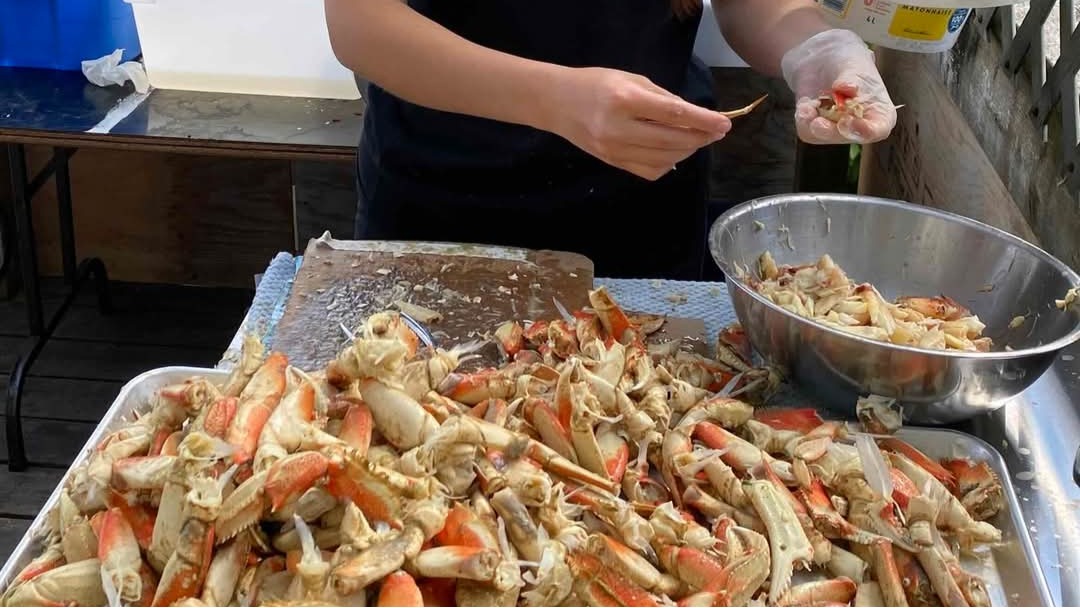
Processing crab that will be available to students through the LF2S south-end pantry. Photo: Marnie Smith.
Haida Gwaii is a remote archipelago on the west coast of British Columbia, Canada, home to the Haida Nation and a population of approximately 4,500 people. Established in 2010, the Haida Gwaii Local Food to School (LF2S) programme is a community-led initiative that integrates local, culturally significant foods, food literacy education, and shared food processing infrastructure to strengthen food security and resilience.
The Haida Gwaii Local Food to School Programme demonstrates how Equitably Transformative Resilience (ETR) can be advanced in practice across multiple, interconnected dimensions of food systems. Its background and relevance to the four thematic areas of the Building Resilient Food Systems framework are outlined below.
Haida Gwaii is home to the Haida Nation and is a remote archipelago on the west coast of British Columbia, Canada, with a population of approximately 4,500 people. The Haida Gwaii Local Food to School (LF2S) programme was established in 2010 and uses learning circles as a form of governance to bring together community members and elders to discuss food security challenges, ideas, and pathways forward.
To avoid dependence on outside food shipments, schools participating in the programme integrate local, culturally significant foods into school meals, including game, seafood, plants, and foods grown in school gardens. The programme includes food literacy education for children, such as learning how to catch and process fish and seafood, harvest and process deer, grow food in school gardens, and learn about Indigenous plant medicines. Food harvested from school gardens is used in school meals, and food scraps and organic waste are processed through composting systems and returned to the gardens.
A key component of the programme is the “Pantry,” which functions as a food hub where food processing equipment is made available to the community, food is prepared for school meals, and canned salmon, deer, and vegetables are stored for distribution.
During the COVID-19 pandemic, the Haida Gwaii Local Food to School programme played a central role in coordinating an emergency food plan. In addition to school meals, food was distributed to the broader community, particularly to elders, during disruptions to ferry services that supply food to grocery stores on the archipelago. Partnerships between the Haida Nation and the Government of British Columbia support ongoing food processing infrastructure and long-term food system resilience.
The Haida Gwaii Local Food to School Programme demonstrates how Equitably Transformative Resilience (ETR) can be advanced in practice across multiple, interconnected dimensions of food systems. Its relevance to the four thematic areas of the Building Resilient Food Systems framework is outlined below.
Learn more:
The Local Foods to School (LF2S) Learning Circle, Haida Gwaii, British Columbia
The Haida Gwaii Local Food to School programme uses learning circles as a form of governance that brings together community members and elders to discuss food security challenges, ideas, and pathways to address them. These learning circles provide a space for collective discussion and decision-making related to food systems and are used to guide programme activities and responses within the community.
The programme has been supported through partnerships between the Haida Nation and the Government of British Columbia. In 2023, the Government of British Columbia announced funding to work with the Haida Nation to support the installation of two smokehouses. These smokehouses are intended to increase the processing of traditional foods while supporting employment and training within the community.
The Haida Gwaii Local Food to School programme includes local food processing and storage infrastructure that supports food security in a remote island context. The “Pantry” functions as a food hub where food processing equipment is available to serve the community, food is produced for school meals, and canned salmon, deer, and vegetables are stored for distribution.
During the COVID-19 pandemic, ferry service disruptions affected food supply to grocery stores on the archipelago. In response, the community came together under the leadership of the Haida Gwaii Local Food to School programme to coordinate an emergency food plan. Moving beyond school meals, the programme distributed food to the wider community, with particular attention to elders. The availability of locally processed and stored foods supported this response during disruptions to external food supply chains.
Schools participating in the programme integrate local, culturally significant foods into school meals, including game, seafood, plants, and foods grown in school gardens. Children learn how to harvest, process, and prepare these foods as part of food literacy education, including knowledge of Indigenous plant medicines.
The Haida Gwaii Local Food to School programme centres Indigenous community participation in local food systems by integrating locally harvested, culturally significant foods into school meals and community distribution. Through school gardens and community food processing and storage, the programme supports small-scale, place-based food production and strengthens community capacity to harvest, prepare, and share food within a remote island context.
The programme strengthens local food provisioning by reducing reliance on external food shipments and increasing the use of locally harvested foods for school meals and community distribution. The Pantry supports the preparation, processing, and storage of local foods, contributing to local food availability and reinforcing territorial food systems within Haida Gwaii.
The Haida Gwaii Local Food to School programme supports food diversification by integrating locally harvested, culturally significant foods into school meals, including game, seafood, plants, and foods grown in school gardens. Children learn how to harvest, process, and prepare these foods, contributing to diverse diets grounded in local food systems and Indigenous foodways.
Schools participating in the programme provide food literacy education that teaches children how to catch and process fish and seafood, harvest and process deer, grow food in school gardens, compost organic waste, and learn about Indigenous plant medicines. These activities support informal, experiential learning that builds skills related to food security, food system resilience, and local self-reliance.
The programme connects education with practical food system skills, strengthening the capacity of youth to understand and engage with local food systems and ecosystems.
The programme explicitly incorporates Indigenous and traditional knowledge, including food harvesting, processing, preservation practices, and knowledge of Indigenous plant medicines. Elders and community members participate through learning circles and school-based activities, supporting intergenerational knowledge transmission.
The “Pantry” functions as a shared community space where food processing equipment is made available, food is prepared for school meals, and preserved foods are stored for distribution. This space supports collective access to food infrastructure and knowledge related to food processing and preservation.
Partnerships between the Haida Nation and the Government of British Columbia support traditional food infrastructure. In 2023, funding was announced to support the installation of two smokehouses to increase the processing of traditional foods, while supporting employment and training within the community.
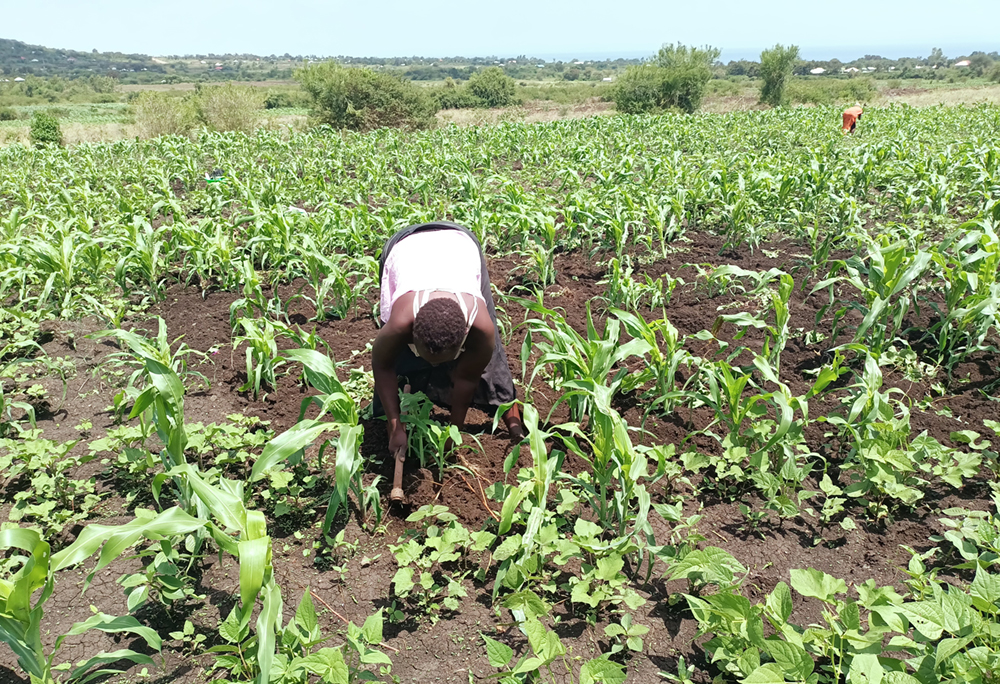
Intercropping in action. Source: Rongo University
The FLOW (Food, Learning and Growing) Partnership is an international research and action network that supports the development of sustainable, resilient regional food systems through collaboration among researchers, practitioners, policymakers, and community partners. Across participating regions, the partnership works to understand how food system practices influence social, environmental, and economic outcomes by developing and applying a shared set of resilience indicators. These indicators provide a common framework for tracking change, facilitating knowledge exchange, and generating locally grounded evidence that supports more just, equitable, ecological, and circular food systems.
In Migori County, Kenya, the FLOW Rongo Project is led by Rongo University in collaboration with farmers, community organizations, county government, women, youth, and other local stakeholders. Through agroecological research, community engagement, farmer education, and Rongo University's UNESCO Chair on Community Radio for Agricultural Education, the project strengthens local food systems while contributing to the FLOW Partnership's broader goal of understanding and communicating pathways toward resilient regional food systems.
These efforts integrate agroecology, farmer-led learning, participatory governance, community radio, policy engagement, and international knowledge exchange, creating a model that links local action with global learning to strengthen long-term food system resilience.
The FLOW Rongo Project was established as part of the international FLOW Partnership, which seeks to support, monitor, and communicate the transition toward resilient regional food systems. Working across multiple countries and regions, the partnership brings together universities, researchers, practitioners, and community organizations to develop shared resilience indicators that capture the interconnected social, environmental, economic, and governance dimensions of food systems. These indicators not only support research and monitoring but also facilitate learning across regions, allowing communities to adapt successful approaches to their own local contexts.
Within Kenya, Rongo University leads the FLOW Rongo project, where agriculture is the primary livelihood for many households. Farmers face increasing pressures from climate change, declining soil fertility, market constraints, and limited access to agricultural extension services. These challenges require farmers to produce more food while adapting to changing conditions and evolving market realities.
The project responds to these challenges by promoting agroecological approaches that strengthen productivity, biodiversity, soil health, and climate resilience while recognizing the importance of governance, local knowledge, and community participation. Through the FLOW Partnership, farmers, researchers, student, and policymakers exchange experiences not only on agricultural practices but also on resilience indicators, governance approaches, and strategies for strengthening regional food systems. This collaborative learning process enables communities to learn from one another while adapting ideas to local environmental, social, and cultural contexts.
Knowledge exchange is a defining feature of the project. Through Rongo University's UNESCO Chair on Community Radio for Agricultural Education, researchers share practical agricultural knowledge while creating opportunities for farmers to ask questions, discuss emerging challenges, and contribute their own experiences. This two-way communication complements field engagement and participatory research, ensuring that knowledge is continuously exchanged between communities, researchers, and decision-makers. By connecting local experience with international collaboration, the FLOW Rongo Project demonstrates how participatory knowledge systems can strengthen food system resilience from the community level upward.
Learn more:
The FLOW Rongo Project places farmers and communities at the centre of food system decision-making. Through the FLOW (Food, Learning and Growing) Partnership, Rongo University works closely with farmers, women, youth, community organizations, researchers, and county government to identify food system challenges and develop locally appropriate solutions. Rather than prescribing interventions, the project encourages dialogue and shared learning, recognizing that farmers are experts in their own environments and that resilient food systems are built through collaboration.
One of the most valuable aspects of the FLOW Partnership is the opportunity to discuss governance alongside agriculture, recognizing that food systems are shaped by who makes decisions about production, marketing, and resource management. These discussions encourage farmers to think beyond farming practices alone and consider how governance influences resilience at the household and community levels.
The project also creates opportunities for women and youth to participate more actively in decision-making. Resilient communities require everyone to sit at the decision table and empowering women and young people strengthens innovation, improves decision-making, and ensures a wider diversity of ideas are reflected in local food system planning.
Through the FLOW Partnership, resources are directed toward long-term food system transformation by investing in research, agroecological learning, community engagement, and knowledge exchange rather than focusing solely on increasing agricultural production. The project supports farmers in adapting to shrinking landholdings, climate change, and evolving market conditions through practical guidance, locally relevant research, and continuous engagement with communities.
The FLOW Rongo Project also contributes to strengthening enabling environments for agroecology through ongoing engagement with county government and agricultural officers. By connecting researchers, farmers, and policymakers, the project helps ensure that community experiences and locally generated knowledge inform broader agricultural planning and policy development within Migori County.
The FLOW Rongo Project helps farming communities prepare for future environmental and climate-related challenges by promoting agroecological approaches that strengthen long-term resilience. Rather than responding only after disasters occur, the project works proactively with farmers to improve soil health, diversify production systems, and identify practices suited to local environmental conditions.
Recognizing that Migori County includes both high-rainfall upland areas and drier lowland regions near Lake Victoria, recommendations are adapted to the different climate conditions farmers face. These ongoing interactions allow researchers and farmers to continually adjust advice based on changing weather patterns, including flooding, drought, and other climate-related pressures.
The project also promotes diversified farming systems as a strategy for reducing risk. By encouraging farmers to grow a variety of crops that provide different nutritional and economic benefits, households are less vulnerable when individual crops fail due to changing climatic conditions.
A defining feature of the FLOW Rongo Project is its ability to connect actors across multiple sectors that influence food systems. Through the FLOW Partnership, Rongo University collaborates with farmers, county government, researchers, community organizations, educational institutions, and international partners to strengthen food system resilience across Migori County.
The project also facilitates learning across regions participating in the FLOW Partnership, allowing researchers and communities to exchange indicators, governance approaches, and agroecological practices from different countries and adapt them to local contexts. Learning how other regions approach similar challenges has strengthened not only agricultural practices but also communication, stakeholder engagement, and collaborative decision-making.
The FLOW Rongo Project recognizes that women are central to household food security and community resilience. Through farmer engagement activities and governance discussions, the project actively encourages women to participate in decision-making processes related to agriculture, climate adaptation, and community development.
Empowering women alongside youth is essential because excluding these groups limits creativity and innovation within communities. By ensuring that women participate in discussions about food systems, climate resilience, and agricultural planning, the project strengthens community capacity to respond collectively to environmental and socioeconomic challenges.
The FLOW Rongo Project focuses on supporting smallholder farmers who are experiencing increasing pressure from shrinking farm sizes and changing climatic conditions. Agroecological practices promoted through the project help farmers improve productivity while maintaining soil health, increasing biodiversity, and reducing reliance on external inputs.
The project also supports farmers by combining traditional agricultural knowledge with newer agroecological approaches. Practices such as crop rotation continue to be valued while farmers are also encouraged to improve soil fertility using locally available organic materials, allowing traditional knowledge and modern innovations to complement one another.
The FLOW Rongo Project supports stronger local food economies by helping farmers better understand market opportunities and encouraging collective approaches to marketing. Rather than focusing solely on production, the project works with farmers to identify where demand exists for different crops and how producers can improve their bargaining power.
Farmers are encouraged to organize collectively, enabling them to attract buyers, negotiate better prices, and make more informed marketing decisions. The project also introduces young people to opportunities across the agricultural value chain, including aggregation, agribusiness, and digital marketing, expanding livelihood opportunities beyond farm production alone.
The FLOW Rongo Project promotes diversified farming systems that increase both dietary diversity and household resilience. Farmers are encouraged to cultivate a wider range of crops that provide proteins, fruits, staple foods, and other nutritious products rather than relying on a single crop.
This diversity improves household nutrition while reducing production risks associated with climate variability and changing environmental conditions. Agroecology is therefore promoted as a means of strengthening both ecological diversity and dietary diversity within local food systems.
Education is a cornerstone of the FLOW Rongo Project. Farmers receive practical guidance through workshops, field engagement, community discussions, and Rongo University's UNESCO Chair on Community Radio for Agricultural Education. The radio platform was established in response to declining agricultural extension services, providing farmers with ongoing access to agricultural information while allowing them to ask questions, share experiences, and contribute their own solutions.
This two-way approach transforms communication from one-way knowledge transfer into continuous dialogue between researchers and farming communities, strengthening trust, learning, and adaptive capacity.
The FLOW Rongo Project recognizes that resilient food systems require both scientific research and local knowledge. Farmers contribute generations of experience managing soils, crops, and changing environmental conditions, while researchers provide new agroecological approaches and technical support.
The project encourages farmers to retain valuable traditional practices, such as crop rotation, while adapting them to contemporary challenges through organic soil management and diversified production systems. This integration of local knowledge with new technologies enables solutions that are both practical and locally appropriate.
Knowledge sharing is one of the defining features of the FLOW Partnership. Through international collaboration, participating regions exchange indicators, experiences, and practical lessons that can be adapted to local contexts. These exchanges strengthen not only agricultural practices but also approaches to governance, communication, and community engagement.
Locally, Rongo University's UNESCO Chair on Community Radio for Agricultural Education creates an accessible platform for continuous dialogue between researchers and farmers. Farmers are able to seek advice, raise emerging challenges, and share their own innovations, ensuring that knowledge flows in both directions rather than remaining within academic institutions.
Education within the FLOW Rongo Project extends beyond technical agricultural training to include governance, communication, leadership, and systems thinking. Through workshops, community engagement, participatory research, farmer dialogues, and community radio, the project strengthens the capacity of farmers and other stakeholders to understand the interconnected nature of food systems.
One of the greatest contributions of the FLOW Partnership has been improving participants' ability to communicate effectively, engage multiple stakeholders, and learn from experiences across different regions. These skills strengthen long-term resilience by supporting collaboration, innovation, and continuous learning.
A distinguishing feature of the FLOW Partnership is its collaborative development and application of resilience indicators. Rather than focusing only on agricultural production, the project uses shared indicators to understand governance, agroecology, food security, and broader food system resilience across participating regions.
Discussing indicators with international partners has broadened local understanding of resilience and provided new ways of working with farmers and communities. These shared indicators help researchers and practitioners monitor change, exchange lessons across regions, and continually adapt approaches to strengthen resilient regional food systems.
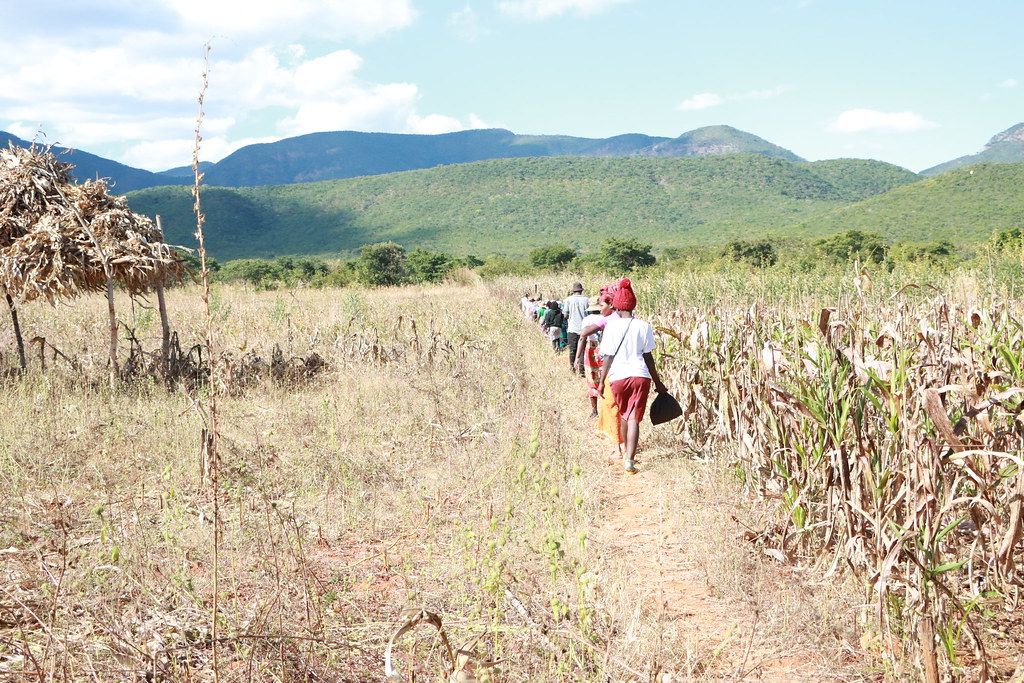
Image: TSURO Trust
For nearly 25 years, the Towards Sustainable Use of Resources Organization (TSURO) Trust has worked with farming leaders in Chimanimani District, Zimbabwe, to promote agroecological practices that transform agricultural landscapes and livelihoods. The organization has its roots within associations of smallholder farmers established in 2000. It uses a bottom-up approach, village-based planning, a multi-stakeholder approach (bringing in key government line ministries or departments, civil society, and community stakeholders), a holistic or multi-sectoral approach (agro-ecological, economic and social interventions), a socially inclusive approach bringing in marginalised members of society (women, those living with disabilities), social mobilisation for collective action (community networks), and use media as a tool for social change.
The TSURO Trust’s agroecology initiatives demonstrate how Equitably Transformative Resilience (ETR) can be advanced in practice across multiple, interconnected dimensions of food systems. Their background and relevance to the four thematic areas of the Building Resilient Food Systems framework are outlined below.
For nearly 25 years, the Towards Sustainable Use of Resources Organization (TSURO) Trust has worked with farming leaders in Chimanimani District, Zimbabwe, to transform agricultural landscapes and livelihoods by promoting agroecological practices, and to empower rural communities to engage in sustainable and profitable agriculture and proper natural resource management. TSURO Trust applies a bottom-up, village-based, multi-stakeholder and socially inclusive approach to strengthen the capacity of rural communities to engage in sustainable and profitable agriculture and natural resource management.
For example, the organization’s Nature Plus (Nature Positive Food Systems) project aims to reach nearly 5,000 individuals (875 families) and focuses on improving livelihoods through income diversification, including apiculture, and gender-responsive solution building. The project supports agroecological practices such as maintaining 365-days-a-year crop cover, minimal soil disturbance, and sowing diverse crops. It also supports farmer-led seed systems and efforts to strengthen seed sovereignty, ecosystems, and groundwater protection.
The Nature Plus project focuses on developing inclusive land-governance structures in consultation with communities and local policymakers. These governance practices emphasize climate resilience and biodiversity while supporting vibrant and prosperous communities. By actively engaging women in decision-making processes, TSURO Trust seeks to lower the vulnerability of women and their families in the context of increasing climate uncertainty.
To scale up these practices, TSURO Trust is building relationships with government departments at local and national levels and expanding its work with individual farmers. This work is supported by strong organizational capacity for extension, partnerships and networks of trust, empowerment across individual, household, community and regional levels, and the support of funders.
Learn More:
TSURO Trust uses support and funding to guide resources and efforts towards ETR. For example, the WFD Project is supported by Weltfriedensdienst e.V (WFD) on behalf of the German Federal Ministry for Economic Cooperation and Development (BMZ). This project has been using this support to bring back biodiversity and groundwater by scaling agro-ecological practices for food and nutrition security, resilience, and environmental protection. The project is being implemented through strategic and complimentary partnerships between Participatory Ecological Land Use Management Zimbabwe (PELUM Zimbabwe), Participatory Organic Research Extension and Training (PORET), and Towards Sustainable Use of Resources Organisation (TSURO) Trust. A sub-objective of the project is improving sustainable livestock and land management according to the concept of holistic land and pasture management (HLLM) and agro-ecology. The project did just that with the help of resources as can be seen through the practice of communal collective herding under the guidance of trained herders. This simple yet powerful practice is bringing back biodiversity, regenerating grasslands, and recharging underground water bodies.
TSURO Trust adopts a bottom-up, village-based, and socially inclusive approach that centers community leadership in decision-making. Through the Nature Plus project, communities, farming leaders, and local stakeholders co-design land-governance structures in collaboration with local policymakers, ensuring that governance systems reflect local priorities while supporting climate resilience and biodiversity.
The project actively embeds gender-responsive participation by strengthening women’s roles in leadership and decision-making processes, reducing vulnerability and building resilience at both household and community levels. By integrating inclusive governance, community cohesion, and locally driven nature-based solutions, the initiative supports marginalized groups in achieving food and nutrition security, accessing markets and business opportunities, and shaping sustainable, climate-resilient livelihoods grounded in the sustainable use of agriculture.
TSURO Trust’s work reflects proactive planning by investing early in long-term, community-led systems that reduce climate and livelihood risks before shocks escalate. For example, the WFD/BMZ-supported project is structured around forward-looking sub-objectives like strengthening Holistic Land and Livestock Management (HLLM), improving water catchment and ecologically sensitive area management, expanding value addition and market access, and advancing shared learning and policy dialogue. Communities can anticipate drought stress, land degradation, and income volatility through coordinated action.
Similarly, Nature Plus builds anticipatory capacity by planning across nature-based solutions, landscape governance, and gender-responsive leadership, including conservation agriculture, landline design and civil works (e.g., contouring, swales, water-harvesting structures), and diversified livelihoods (e.g., aquaculture, beekeeping, mushrooms). Baseline assessments (e.g., the May 2024 Rusitu cluster study) and community implementation structures (e.g., committees with agreed rules for shared assets like solar driers) further support planned, preventative decision-making to ensure interventions are designed in advance, locally owned, and resilient over time.
TSURO Trust’s approach is grounded in multi-sectoral coordination, bringing together civil society, government, research institutions, and community actors to deliver integrated resilience outcomes. For example, the WFD/BMZ-supported project (2024–2028) is implemented through a structured partnership between TSURO Trust, PELUM Zimbabwe, and PORET, with clearly defined and complementary thematic roles across livestock and land management, water and ecological resource management, market access and value creation, and shared learning and policy engagement, ensuring alignment across environmental, livelihood, and governance sectors.
Cross-sector collaboration is also embedded in the Nature Plus Project, which works with local communities, district-level institutions, government structures, and academic partners (including CELUCT, the University of Zimbabwe, Bindura University, and Fambidzanai School of Agroecology) to integrate science, policy, and local knowledge in the design of nature-based solutions and climate-resilient livelihoods.
Initiatives such as the Seed & Knowledge Initiative and the GEF-supported aquaculture and restoration activities link farmers to government training systems, market infrastructure, and community governance structures, showing how coordination across agriculture, environment, water, education, and markets enables more coherent, scalable, and resilient food system transformation.
TSURO Trust integrates gender responsiveness into resilience planning by embedding women’s leadership, participation, and decision-making into preparedness structures, rather than treating gender as a parallel or add-on theme. For example, the Nature Plus Project explicitly centers gender-responsive nature-based solutions and strengthens women’s roles in governance and leadership as part of climate adaptation planning, helping women shape preparedness, response priorities, and community contingency strategies.
In the WFD/BMZ-supported project, proactive risk reduction through Holistic Land and Livestock Management (HLLM), water resource management, and livelihood diversification reduces household vulnerability to climate shocks in ways that directly benefit women, who are often disproportionately affected by drought, food insecurity, and water scarcity.
Across projects, community structures such as farmer committees, seed systems, shared infrastructure governance, and market groups provide platforms where women actively participate in planning, resource allocation, and decision-making. This ensures that emergency preparedness and contingency planning reflect gendered risks and livelihood realities, building resilience strategies that are socially inclusive, locally grounded, and structurally transformative rather than reactive.
TSURO Trust advances the rehabilitation of degraded landscapes and productive systems through ecologically regenerative, community-led practices that restore ecosystem function while strengthening livelihoods. For example, the WFD/BMZ-supported project uses Holistic Land and Livestock Management (HLLM) and communal collective herding to regenerate grasslands, restore soil structure, enhance biodiversity, and recharge groundwater systems.
The Nature Plus Project supports ecological restoration through conservation agriculture, agroforestry, and landline design and civil works, including soil conservation measures, water-harvesting structures, contouring, and landscape protection systems that reduce erosion, improve soil fertility, and stabilize water tables. These interventions actively rehabilitate farmland while safeguarding ecosystem services essential for long-term food production.
The GEF-supported project in the Rusitu cluster contributes to restoration through Indigenous tree nurseries, reforestation, aquaculture systems, and farmer-led land regeneration.
The Seed & Knowledge Initiative strengthens ecological resilience via community seed banks, Open Pollinated Varieties (OPV) seed systems, and locally adapted crop diversity. Together, these initiatives demonstrate how TSURO Trust restores productive systems by aligning ecological regeneration with sustainable livelihoods, biodiversity recovery, and long-term landscape resilience.
TSURO Trust’s work is grounded in empowering marginalized groups and strengthening small-scale, diversified farming systems as the foundation of resilient food systems. Across its programmes, interventions are designed to reduce barriers to participation and expand access to resources, skills, and decision-making for women, youth, and other vulnerable community members.
The Nature Plus Project targets marginalized households by promoting diversified, climate-resilient livelihoods, including aquaculture, beekeeping, mushroom production, small livestock rearing, and piped water schemes, ensuring that small-scale farmers can build multiple income streams rather than relying on single-crop or high-risk production systems. Gender-responsive programming also supports women’s leadership, economic participation, and access to markets and governance spaces.
In the WFD/BMZ-supported project, smallholder farmers are strengthened through agroecological practices, Holistic Land and Livestock Management (HLLM), regenerated pastures, improved water access, and market integration, enabling diversified production systems that enhance food security, ecological sustainability, and income stability.
The Seed & Knowledge Initiative and GEF-supported programmes empower farmers through household and community seed banks, Open Pollinated Varieties (OPV) seed systems, farmer-built aquaculture infrastructure, Indigenous nurseries, and community-governed value-addition assets (e.g., solar driers). These approaches reinforce farmer autonomy, knowledge sovereignty, and diversified production, helping small-scale farmers become leaders of transformation in resilient, regenerative food systems.
TSURO Trust strengthens local and territorial trade systems by building community-based market infrastructure and farmer-led value chains. For example, through the Seed & Knowledge Initiative, farmers exchange and sell locally adapted Open Pollinated Varieties (OPV) seeds and grain through community seed outlets and the ChimaniManiBeu Seed Market Day, strengthening local seed economies and food sovereignty.
The WFD/BMZ-supported project and GEF-supported projects enhance market access and value addition through community-managed infrastructure (e.g., solar driers, local farmers’ markets, and village-based enterprises), helping small-scale producers to trade within local and territorial markets.
TSURO Trust supports culturally diverse and locally rooted food systems by strengthening production practices and food sources that reflect local traditions and diets. Through initiatives such as the Seed & Knowledge Initiative, communities preserve and exchange locally adapted Open Pollinated Varieties (OPV) seeds, which promotes indigenous crop varieties that are central to cultural food practices and traditional cuisines.
TSURO Trust advances agroecological research, innovation, and locally adapted technologies through practice-based learning, participatory research, and community-led involvement. For example, the WFD/BMZ-supported project and the Nature Plus Project integrate innovations such as Holistic Land and Livestock Management (HLLM), conservation agriculture, collective herding systems, landline design, water-harvesting structures, and regenerative grazing techniques that combine traditional knowledge with ecological science. This is supported through partnerships with local universities, research institutions, and agroecology training centres (including the University of Zimbabwe, Bindura University, Fambidzanai School of Agroecology), to ensure that knowledge is co-produced and shared with communities and grounded in local regions.
TSURO Trust strengthens food system resilience by embedding education, training, and knowledge-sharing. Through the WFD/BMZ-supported project and the Nature Plus Project, farmers, herders, and community leaders receive ongoing training in agroecology, conservation agriculture, Holistic Land and Livestock Management (HLLM), water and land stewardship, and nature-based solutions, which builds long-term adaptive capacity rather than short-term dependency. This is supported through collaboration with educational and research institutions (including the University of Zimbabwe, Bindura University, and Fambidzanai School of Agroecology), as well as community-based learning spaces such as rural knowledge centres, demonstration farms, and farmer-led training hubs.
TSURO Trust centers local, indigenous, and marginalized knowledge systems. Across its programmes, agroecological practices, land management strategies, and livelihood systems are co-developed with communities, drawing directly on traditional ecological knowledge, land-use practices, and farmer innovation. For example, the Seed & Knowledge Initiative preserves and mobilizes locally adapted Open Pollinated Varieties (OPV) seeds, community seed banks, and indigenous farming knowledge, while the WFD/BMZ-supported project and Nature Plus Project integrates community-led grazing systems, conservation farming methods, and landscape stewardship practices rooted in local knowledge. These approaches ensure that resilience strategies are locally grounded, culturally embedded, and community-owned.
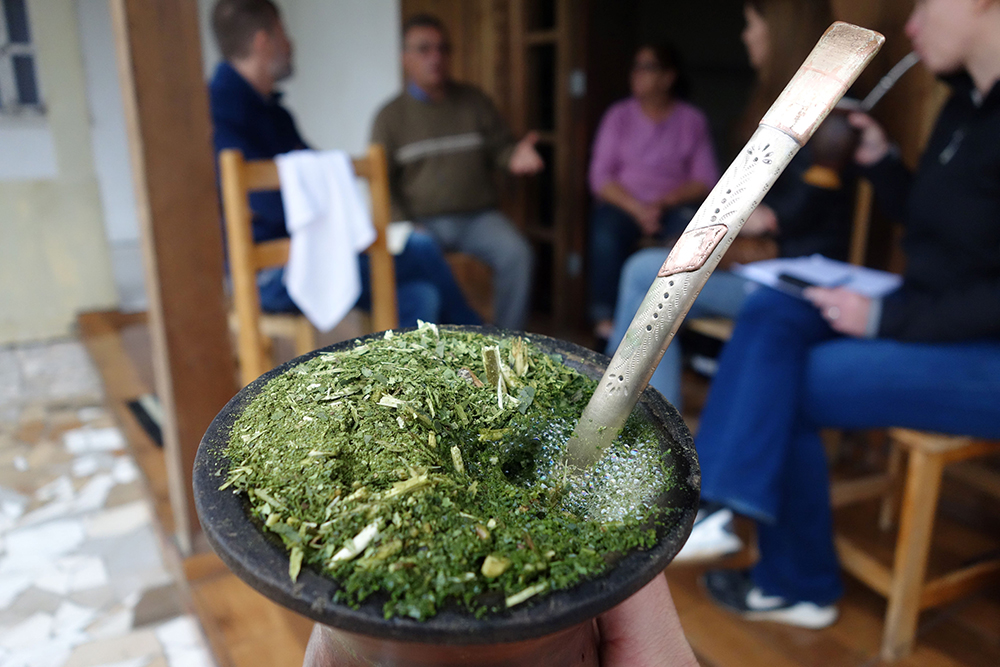
Image: FLOW Partnership South Brazil Team
The FLOW Southern Brazil Project is part of the FLOW (Food, Learning and Growing) Partnership, an international research and action network that supports, tracks, and communicates pathways toward sustainable and resilient regional food systems. In Southern Brazil, the project focuses on traditional shade-grown erva-mate production systems in the Araucaria Forest of Paraná, where family farmers, traditional communities, and Indigenous communities have cultivated erva-mate for generations using agroecological and agroforestry practices.
Rather than introducing a new production system, the FLOW Southern Brazil Project supports the recognition, monitoring, and strengthening of an existing biocultural landscape. Through CEDErva and a network of research institutions, farmer organizations, cooperatives, community associations, and local partners, the project documents how traditional erva-mate systems contribute to food security, biodiversity conservation, cultural identity, environmental regeneration, and community well-being.
These efforts integrate traditional agroforestry, cultural heritage, biodiversity conservation, participatory research, territorial development, and food system monitoring, creating a model that links forest protection with sustainable livelihoods and long-term regional food system resilience.
The FLOW Southern Brazil Project is rooted in the traditional agroforestry systems used to produce erva-mate in the shade of the Araucaria Forest in Southern Paraná. Erva-mate is a native tree species whose leaves are processed and consumed as an infusion across much of South America. In this region, it is cultivated within forested landscapes rather than through forest clearing, allowing agricultural production to coexist with biodiversity conservation, cultural continuity, and forest stewardship.
Traditional erva-mate systems are closely tied to family farming and to traditional and Indigenous communities in Southern Brazil. These systems combine agricultural and agroforestry practices, native forest management, food crops, forest products, and locally rooted ecological knowledge. Because erva-mate thrives in the understory of the Atlantic Forest, its production can help protect remaining forest areas while supporting livelihoods and maintaining cultural practices connected to land, forest, and food.
The FLOW Southern Brazil Project is led by CEDErva in partnership with research institutions, farmer unions, cooperatives, community associations, public agencies, and local organizations. Together, these partners work to better understand the social, environmental, cultural, and economic contributions of traditional erva-mate systems. A major focus of this work has been supporting the recognition of shade-grown erva-mate as a Globally Important Agricultural Heritage System, while using the FLOW Partnership’s indicator process to monitor regional impacts and identify innovations that strengthen food security, environmental regeneration, and community well-being.
Through the FLOW Partnership, the project contributes to a broader international effort to build indicator-driven narratives about resilient regional food systems. In Southern Brazil, this means documenting how traditional erva-mate systems sustain biodiversity, support family farmers, protect the Araucaria Forest, and generate lessons for sustainable territorial development.
Learn More:
The FLOW Southern Brazil Project is grounded in participatory and locally led decision-making through its work with family farmers, traditional communities, Indigenous communities, cooperatives, farmer unions, community associations, researchers, and local organizations. Rather than treating communities as research subjects, the project recognizes them as knowledge holders and active partners in documenting, strengthening, and communicating the value of traditional erva-mate systems.
CEDErva leads a broad network of institutions and community partners working together to understand the ongoing impacts of these systems on family and community well-being, cultural continuity, biodiversity, and sustainable territorial development. This collaborative structure ensures that decision-making is not limited to academic or institutional actors, but is shaped by those who cultivate, manage, and sustain erva-mate landscapes across generations.
The project’s work toward recognition as a Globally Important Agricultural Heritage System also reflects this participatory approach. The process depends on documenting community knowledge, local histories, traditional practices, and the social organization that supports agroforestry production. In this way, governance is rooted in collective recognition of traditional systems as living landscapes shaped by communities, culture, and ecology.
The FLOW Southern Brazil Project directs resources toward strengthening traditional agroforestry systems that already contribute to food security, environmental regeneration, cultural identity, and sustainable livelihoods. Rather than prioritizing conventional agricultural intensification or monoculture expansion, the project supports systems where production is embedded within the forest landscape.
Through the FLOW Partnership’s indicator process, partners are able to document and communicate the social, environmental, cultural, and economic benefits of traditional erva-mate systems. This helps make visible the value of agroecological production systems that are often undervalued in mainstream food and agricultural policy. By producing evidence about biodiversity, well-being, livelihoods, and territorial impacts, the project supports broader recognition and investment in food systems that protect ecosystems while sustaining communities.
The project also contributes to long-term territorial development by supporting the GIAHS recognition process and strengthening regional networks around traditional erva-mate. These efforts help direct attention, institutional support, and public recognition toward systems that conserve forests, support family farming, and sustain cultural landscapes.
The FLOW Southern Brazil Project supports proactive resilience by strengthening agroforestry systems that protect biodiversity, maintain forest cover, and reduce the vulnerability of food systems to environmental degradation. Traditional shade-grown erva-mate systems represent a long-term adaptation strategy because they produce food and income while maintaining the ecological functions of the Araucaria Forest.
By supporting and monitoring these systems, the project helps anticipate future risks linked to deforestation, biodiversity loss, climate change, and the erosion of traditional knowledge. The FLOW indicator process provides a way to track how these systems contribute to environmental regeneration, food security, and community well-being over time, allowing partners to better understand what supports resilience at the regional scale.
This approach is not reactive. It works by protecting and strengthening existing systems that have already sustained communities and landscapes over generations.
The FLOW Southern Brazil Project is built through coordination across research, farming, community, public, and civil society sectors. Project partners include CEDErva, Embrapa Forestry, Embrapa Soils, the State University of Ponta Grossa, farmer unions, cooperatives, ecological farmer associations, community associations, rural development institutions, private sector actors, and the Observatory for Traditional and Agroecological Erva-mate.
This network brings together actors who might otherwise work separately across agriculture, forestry, history, rural development, research, environmental protection, and community organizing. Through the FLOW Partnership, these actors collaborate to document the impacts of traditional erva-mate systems, support the GIAHS process, and communicate the importance of agroecological and agroforestry systems for sustainable regional food systems.
The strength of this project lies in the way it connects institutions and communities around a shared territorial vision: protecting the forest while sustaining livelihoods, food cultures, and local economies.
Traditional shade-grown erva-mate systems contribute directly to the rehabilitation and protection of productive landscapes by maintaining agriculture within forested ecosystems. Unlike production models that depend on clearing forests, these systems cultivate erva-mate in association with native forest cover, agroforestry practices, food crops, and forest products.
Because erva-mate grows in the understory of the Araucaria Forest, its traditional management supports productive systems that are also ecologically regenerative. These systems help protect remaining areas of the Atlantic Forest biome, sustain habitat for diverse plant and animal species, and maintain ecological functions such as soil protection, water regulation, and biodiversity conservation.
The FLOW Southern Brazil Project supports these systems by documenting their environmental services and highlighting their role as productive landscapes that conserve rather than replace forest ecosystems.
The project supports family farmers, traditional communities, and Indigenous communities whose knowledge and practices have sustained erva-mate agroforestry systems for generations. These groups are central to the maintenance of the landscape, yet their contributions to biodiversity conservation, cultural heritage, and sustainable food systems are often undervalued.
By documenting traditional knowledge, supporting community participation, and strengthening the recognition of shade-grown erva-mate systems, the FLOW Southern Brazil Project helps make visible the role of small-scale producers and traditional communities in sustaining resilient food systems. This recognition can strengthen local agency, support farmer livelihoods, and create greater appreciation for agroecological systems rooted in community practice.
Traditional erva-mate production supports territorial economies by linking family farming, agroforestry, local processing, cooperatives, and regional markets. The project partners include farmer unions, cooperatives, ecological farmer associations, community associations, and private sector actors connected to the erva-mate value chain, reflecting the importance of local and regional trade networks.
By strengthening recognition of shade-grown erva-mate as a culturally and ecologically significant product, the project supports markets that value traditional production systems rather than treating erva-mate only as a commodity. This can help strengthen territorial food economies, support small-scale producers, and encourage market pathways that reward forest stewardship and cultural heritage.
Erva-mate is not only an agricultural product; it is a culturally significant food and beverage deeply embedded in social life across Southern Brazil and much of South America. Traditional shade-grown erva-mate systems sustain cultural identity through practices of cultivation, harvesting, processing, sharing, and consumption that have been passed down across generations.
The FLOW Southern Brazil Project supports culturally diverse food systems by recognizing the importance of erva-mate as both food heritage and living ecological practice. Its work helps protect not only the plant itself, but also the social relationships, local histories, and traditional knowledge connected to its production and use.
The FLOW Southern Brazil Project uses the FLOW Partnership’s indicator process to document the social, environmental, cultural, and economic contributions of traditional shade-grown erva-mate systems in Southern Paraná. Rather than relying only on conventional agricultural metrics, the project tracks how these systems support family and community well-being, biodiversity conservation, environmental regeneration, food security, and sustainable territorial development.
This data collection is grounded in collaboration with CEDErva, research institutions, local organizations, farmer unions, cooperatives, and community associations. By working with the communities that maintain traditional erva-mate systems, the project helps ensure that data reflects local realities and does not separate ecological outcomes from cultural knowledge, livelihoods, and community priorities. The indicator process also supports responsible knowledge governance by making visible the value of traditional and agroecological systems while respecting the role of farmers, traditional communities, and Indigenous communities as knowledge holders.
The FLOW Southern Brazil Project supports agroecological research and innovation by studying and strengthening traditional erva-mate production systems that have been maintained for generations in the shade of the Atlantic Forest. These systems combine agroforestry, family farming, forest stewardship, and traditional ecological knowledge, allowing erva-mate production to coexist with biodiversity conservation and ecosystem protection.
Through CEDErva and its partner network, the project identifies innovations that promote food security, environmental regeneration, and improved well-being within erva-mate-related food systems. This includes documenting how traditional agroforestry practices protect remaining Atlantic Forest landscapes, sustain diverse plant and animal life, and support family farmers and traditional communities. Instead of replacing local systems with external technologies, the project treats traditional agroecological knowledge itself as a form of innovation, showing how long-standing forest-based production systems can guide more resilient regional food systems.
The FLOW Southern Brazil Project is fundamentally grounded in the recognition of traditional, Indigenous, and local knowledge systems. Traditional shade-grown erva-mate production depends on accumulated ecological knowledge about forest management, plant relationships, harvesting practices, seasonal cycles, and the cultural meanings of the landscape.
Rather than separating scientific research from community knowledge, the project brings them into dialogue. CEDErva and its partners work with farming families and community organizations to document the knowledge embedded in traditional erva-mate systems and demonstrate its value for biodiversity conservation, food security, cultural continuity, and sustainable land use.
This approach positions traditional knowledge not as a relic of the past, but as a living system of innovation and resilience.
Knowledge sharing is central to the FLOW Southern Brazil Project. Through the FLOW Partnership, local experiences from Southern Brazil are connected with an international network of researchers, practitioners, and community partners working on sustainable regional food systems. The project contributes to shared learning by documenting the impacts of traditional erva-mate systems and communicating their value across regions.
At the regional level, the project brings together research institutions, farmer organizations, cooperatives, public agencies, and community associations to share knowledge and coordinate action. The Observatory for Traditional and Agroecological Erva-mate also plays an important role in strengthening communication, documentation, and public recognition of these systems.
This knowledge-sharing model helps ensure that lessons from traditional erva-mate systems are not isolated within one community or sector, but become part of wider conversations about agroecology, heritage, food systems, and resilience.
The FLOW Southern Brazil Project supports education by documenting and communicating the social, cultural, environmental, and economic importance of traditional erva-mate systems. Through research partnerships, community programming, workshops, public communication, and the GIAHS process, the project helps build wider understanding of how agroforestry systems contribute to resilient regional food systems.
Education in this project is not limited to formal training. It includes intergenerational learning, community storytelling, farmer-to-farmer exchange, and the transmission of ecological knowledge through everyday practices of forest management and erva-mate production. These forms of learning are essential for sustaining the knowledge needed to protect both cultural heritage and ecological resilience.
A defining feature of the FLOW Southern Brazil Project is its use of the FLOW Partnership’s indicator process to monitor and communicate the impacts of traditional erva-mate systems. These indicators help partners understand how agroforestry practices contribute to food security, environmental regeneration, cultural identity, family and community well-being, and sustainable territorial development.
The project uses indicator-driven narratives to make visible the interrelated effects of traditional production systems across social, environmental, and economic dimensions. This monitoring approach is especially important because many of the benefits of traditional erva-mate systems, such as biodiversity conservation, cultural continuity, forest protection, and community well-being, are not always captured through conventional agricultural metrics.
By tracking these broader impacts, the FLOW Southern Brazil Project strengthens the evidence base for protecting and investing in traditional agroecological systems as pathways toward resilient regional food systems.
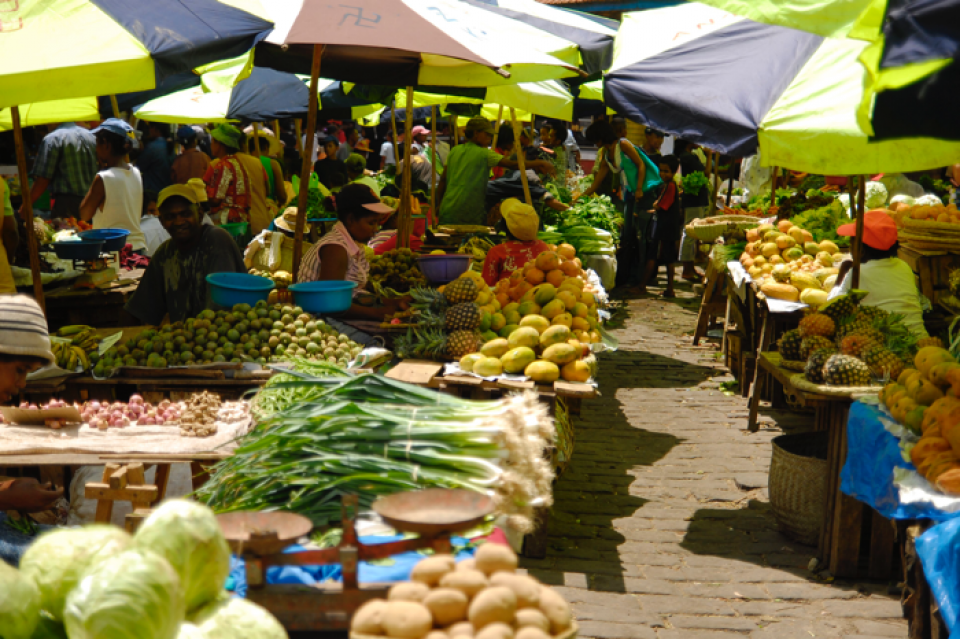
Image: FAO Madagascar
In Antananarivo, Madagascar, a series of long-term local initiatives helped the city and its surrounding food systems adapt quickly to the disruptions of the COVID- 19 pandemic. Since the early 2000s, the Urban Agriculture Department had supported vegetable gardens in schools and community spaces, established a central food distribution point that eliminated intermediaries, and created local access points across the city to connect farmers and consumers more directly. COVID-19 made it clear that human networks, physical infrastructure and supportive policies and programmes are key to resilience. In Antananarivo, multiple stakeholders who were engaged across the food system found relevant solutions that enabled a multisector food strategy, contributing to a more sustainable, economic and social approach for the benefit of the food system of Antananarivo city region and the whole national territory.
This example demonstrates how Equitably Transformative Resilience (ETR) can be advanced in practice across multiple, interconnected dimensions of food systems. Their background and relevance to the four thematic areas of the Building Resilient Food Systems framework are outlined below.
In the early 2000s several initiatives were implemented that later enabled the City of Antananarivo, Madagascar and its surrounding regional food system to be more agile in adapting to the COVID-19 pandemic. Vegetable gardens in schools and other areas that had been established by the Urban Agriculture Department, an existing central distribution point that eliminated intermediaries, and the creation of strategically located direct access points throughout the city translated into more stable market access for farmers and the availability of better food for consumers. These initiatives were layered on top of work done the previous decade to protect land in Antananarivo as a strategy to mitigate flooding and landslides and to address food security and nutrition. Despite shorter market hours as COVID-19 unfolded, the decision of the national government to process perishable food, in particular milk, poultry and eggs, meant that food loss was minimized and people could still access healthy food. A prior multistakeholder engagement process had resulted in a network of food-system actors that were brought together as COVID 19 emerged, which facilitated this agile reaction. Existing food-flow maps informed planning and action in response to COVID-19 and provided an example of more diversified, locally integrated food systems developed around city regions as a complement to existing food chains. Forward planning provided both resources and capacity to understand and address food-security and livelihood challenges, helping to avoid more catastrophic results. COVID-19 made it clear that human networks, physical infrastructure and supportive policies and programmes are key to resilience. In Antananarivo, multiple stakeholders who were engaged across the food system found relevant solutions that enabled a multisector food strategy, contributing to a more sustainable, economic and social approach for the benefit of the food system of Antananarivo city region and the whole national territory.
This example shows how diversity in production, markets, and governance, supported by participatory planning and local infrastructure, can foster ETR by enabling rapid adaptation, improving food access, and building long-term capacity within city-region food systems.
Learn More:
Urban agriculture as a climate change and disaster risk reduction strategy
The Antananarivo city-region food system initiatives contribute directly to shaping policy pathways that uphold the Right to Food by embedding food security, nutrition, and equitable access into urban planning and governance frameworks. Long-term investments in urban agriculture, direct farmer–consumer market systems, protected productive land, and diversified distribution infrastructure have structurally strengthened access to fresh, nutritious, and affordable food across the city region. During the COVID-19 crisis, policy decisions to continue processing perishable foods (including milk, poultry, and eggs) prevented food loss and maintained access to healthy foods, demonstrating state commitment to safeguarding food availability during systemic shocks. Multistakeholder consultations and the United Nations Food and Agriculture Organization (FAO) supported processes further contributed to the development of a multisector food strategy for Antananarivo that prioritizes year-round access to healthy food, local supply chains, ecosystem protection, and social equity. Through these integrated governance processes, food access is treated as a public responsibility embedded in policy design, aligning the initiative with ETR principles and the structural realization of the Right to Food.
Public institutions in Antananarivo have strategically directed resources toward resilience-building food system transformation through long-term investment in urban agriculture, local food infrastructure, and city-region food system networks. Since the early 2000s, municipal support for school and community gardens, local distribution hubs, and direct access markets has strengthened local food economies and diversified supply chains. Urban planning investments to protect land from flooding and landslides further redirected resources toward ecological resilience and food system stability. National policy support during COVID-19, including continued processing of perishable foods, reflects adaptive public investment to protect food access and livelihoods. FAO-supported city-region food system processes, multisector consultations, and coordinated action planning further demonstrate institutional commitment to long-term transformation rather than short-term crisis response. Together, these investments redirect public resources toward resilient and socially inclusive food system infrastructures, advancing ETR objectives at the city-region scale.
Participatory and locally led decision-making is embedded within the Antananarivo city-region food system model through multistakeholder governance, community engagement, and inclusive planning processes. Long-standing collaboration between municipal authorities, community organizations, farmers, market actors, national institutions, and the FAO created a distributed governance network that was rapidly mobilized during the COVID-19 crisis. Multi-stakeholder consultation workshops brought together actors across production, processing, distribution, consumption, waste management, and governance to collectively define a shared vision for the food system and identify priority actions. Community-level initiatives such as school gardens, local access points, and urban agriculture training sites further embed local participation within food system governance. This model ensures that food system transformation is shaped through collective planning, community knowledge, and cross-sector dialogue, aligning with ETR principles of inclusive governance, shared agency, and locally rooted resilience.
The Antananarivo city-region food system demonstrates strong proactive and anticipatory action planning through long-term investments made well before the COVID-19 crisis. Since the early 2000s, the Urban Agriculture Department had supported school and community vegetable gardens, established direct farmer–consumer access points, and developed a central food distribution system that eliminated intermediaries. Urban planning initiatives to protect land from flooding and landslides further strengthened the city’s adaptive capacity by preserving productive spaces within the city region. These forward-looking interventions created resilient food infrastructures, diversified supply pathways, and strengthened local market systems that enabled rapid adaptation during the pandemic. Existing food-flow maps, local production networks, and governance structures allowed decision-makers to anticipate vulnerabilities, coordinate responses, and prevent more severe food security and livelihood impacts. This demonstrates a clear anticipatory resilience model, where preparedness, planning, and system design were embedded prior to crisis rather than developed reactively.
The Antananarivo case is structured around strong multisectoral coordination and cross-sector collaboration. A pre-existing multistakeholder engagement process had already established a network of food-system actors spanning agriculture, urban planning, distribution, governance, education, and public institutions, which was rapidly mobilized as COVID-19 emerged. Collaboration occurred across municipal authorities, the national government, the FAO, urban planning bodies, community organizations, and food system actors, enabling a coordinated response to market disruptions and supply challenges. The continuation of perishable food processing (milk, poultry, eggs), urban agriculture initiatives, distribution systems, and land-use planning illustrates integrated action across food production, infrastructure, governance, and public policy sectors. This coordination enabled the development of a multisector food strategy for the Antananarivo city region, demonstrating how cross-institutional collaboration strengthens resilience, accelerates response capacity, and supports long-term food system transformation through integrated governance.
Disaster-resilient infrastructure and policy measures are a defining feature of the Antananarivo city-region food system approach. Urban planning policies to protect land from flooding and landslides preserved productive agricultural spaces while reducing disaster risk, directly linking food security with climate adaptation infrastructure. The establishment of local distribution points, central food hubs, and direct access markets strengthened physical food system infrastructure, improving stability during crisis periods. Urban agriculture initiatives functioned as living resilience infrastructure, integrating food production into flood-prone and vulnerable urban spaces while supporting water management, land protection, and ecosystem services. Policy decisions during COVID-19, including the continuation of perishable food processing, further demonstrate the role of adaptive policy in protecting food access and minimizing food loss. Together, these measures illustrate a resilience model where physical infrastructure, spatial planning, and policy interventions are integrated to reduce vulnerability to shocks and strengthen long-term food system stability.
The Antananarivo city-region food system initiatives contribute to the rehabilitation and ecological restoration of productive systems through the integration of urban agriculture into land-use planning, disaster risk reduction, and environmental protection strategies. Urban planning efforts to protect land from flooding and landslides preserved productive agricultural spaces while restoring ecological functions such as water infiltration, flood regulation, and soil stability. School and community gardens, protected agricultural zones, and urban agriculture initiatives function as regenerative landscapes that reconnect food production with ecosystem services. These productive systems simultaneously support food security, climate adaptation, and environmental restoration by transforming vulnerable urban spaces into multifunctional ecological assets. This approach aligns food production with landscape restoration, demonstrating how productive systems can be rehabilitated to serve both ecological resilience and human well-being.
Legal and regulatory mechanisms are embedded in the Antananarivo city-region food system through urban planning policies, land-use regulation, and territorial governance frameworks. Policies to protect land from flooding and landslides function as regulatory instruments that preserve productive agricultural spaces while reducing disaster risk. Urban planning decisions integrating agriculture into city development, school infrastructure, and public land use represent regulatory approaches that formalize food production within urban governance systems. National policy decisions during COVID-19, including the continuation of perishable food processing, further demonstrate regulatory intervention to safeguard food access and system stability. These measures show how legislative and regulatory tools are used to structurally embed food security, resilience, and sustainability into governance systems rather than relying solely on voluntary or informal mechanisms.
The Antananarivo initiatives empower small-scale producers and marginalized urban and peri-urban communities by strengthening local food systems, urban agriculture, and territorially embedded production networks. School and community gardens, local access points, and direct farmer–consumer connections support small-scale production and diversified food systems while improving livelihood stability. The creation of direct market access structures reduces dependency on intermediaries and strengthens the economic position of small producers. Multistakeholder planning processes and community-level initiatives embed local actors as active participants in governance and food system transformation. This approach aligns with ETR by strengthening agency, resilience, and economic participation of small-scale producers and vulnerable urban populations within diversified, locally rooted food systems.
Support for local and territorial trade is a core feature of the Antananarivo city-region food system model. The establishment of local access points, central distribution hubs, and direct farmer–consumer connections strengthens territorially embedded markets and short food supply chains. These systems improve local market integration, stabilize farmer incomes, and increase access to fresh food for urban consumers. Urban agriculture initiatives and city-region food networks reinforce local distribution of food, resources, and value within the territorial economy. This localized trade model enhances resilience by reducing dependence on external supply chains and strengthening city-region food sovereignty and economic stability.
The Antananarivo initiatives support culturally diverse food systems by strengthening local production, urban agriculture, and territorially embedded food networks that reflect local dietary practices and food cultures. Community gardens, school gardens, and local food markets enable the production and consumption of culturally appropriate foods rooted in local traditions and preferences. Diversified production systems and improved access to fresh foods strengthen dietary diversity while maintaining culturally relevant food practices. By embedding food production within local, social and ecological contexts, the initiative supports food systems that reflect cultural identity, local knowledge, and community-defined nutrition priorities, aligning with ETR principles of food sovereignty and cultural sustainability.
Consumer education and information are supported through school gardens, community agriculture initiatives, training sites, and participatory planning processes that build food literacy and awareness. School-based gardens function as learning spaces for urban agriculture, nutrition, and sustainable food practices, while community initiatives strengthen knowledge of local food systems, nutrition, and resilience. Multistakeholder consultations and city-region food system planning processes further promote public awareness of sustainable production, consumption, and food system transformation. These initiatives contribute to informed consumer participation, dietary awareness, and engagement with local food systems, strengthening long-term food system resilience through education and knowledge sharing.
The Antananarivo city-region food system approach integrates responsible data collection and governance through the use of food-flow mapping, territorial planning tools, and coordinated information systems that inform decision-making across institutions. Existing food-flow maps were actively used during the COVID-19 crisis to guide planning, identify vulnerabilities, and coordinate responses across the food system. These data tools supported evidence-based governance by enabling authorities and stakeholders to understand supply routes, production–distribution linkages, and system dependencies. Data was embedded within multistakeholder governance processes, ensuring that information served public planning, resilience building, and coordinated action rather than isolated institutional control. This demonstrates a governance model where data functions as a shared public resource for resilience planning and food system transformation.
Knowledge sharing in the Antananarivo city-region food system is structured through open, multisectoral networks and participatory planning platforms. Multistakeholder engagement processes brought together actors from production, processing, distribution, consumption, waste management, and governance to share information, co-develop strategies, and coordinate responses. Food-flow maps, consultation workshops, and joint planning exercises enabled shared understanding of system dynamics and collective problem-solving. These processes ensured that knowledge circulated across institutions, sectors, and community actors rather than remaining siloed within single agencies. Through these open and collaborative knowledge systems, the initiative supports transparent information exchange as a foundation for coordinated resilience building and food system governance.
Education is embedded in the Antananarivo initiative through school gardens, community agriculture spaces, and training-oriented urban agriculture programs that function as learning sites for food production, nutrition, and sustainability. Public primary schools are actively engaged in converting land into vegetable gardens that supply school canteens and serve as training sites for urban agriculture practices. These spaces support food literacy, ecological awareness, and skills development while strengthening local food production capacity. Community gardens and urban agriculture initiatives further serve as informal education platforms that build long-term adaptive capacity within the city-region food system. This integration of education into food system infrastructure strengthens resilience by embedding learning, skills transfer, and knowledge building within everyday food practices.
Monitoring and assessment are embedded within the Antananarivo city-region food system through structured planning tools, resilience assessments, and food system mapping processes. The use of food-flow maps, vulnerability assessments, and FAO-supported city-region food system frameworks enables ongoing evaluation of system performance, resilience capacity, and adaptive response mechanisms. Multistakeholder consultations and policy development processes further support continuous learning and system assessment. These mechanisms allow actors to identify risks, evaluate system weaknesses, and adjust strategies to strengthen food security, livelihoods, and resilience over time. This reflects a dynamic monitoring model that integrates learning, planning, and governance into long-term resilience building.

Daniel, from the village of Baraca, digs a ditch to allow water to naturally infiltrate a restoration site, facilitating natural mangrove regeneration. Image courtesy of Wetlands International & Beyond Borders Media.
Guinea-Bissau contains one of the most extensive mangrove ecosystems in the world, with mangroves covering approximately 326,000 hectares, or 9% of the country’s total land area — the highest proportion globally. These coastal ecosystems are essential to food systems, livelihoods, and climate resilience, supporting fisheries, protecting rice cultivation, and shielding coastal communities from flooding and storm surges. However, mangrove ecosystems in Guinea-Bissau declined by nearly one-third over the past 80 years due to land conversion, firewood extraction, and environmental degradation.
Since 2016, a large-scale grassroots mangrove restoration movement has emerged, led by local community organizations in collaboration with international partners such as Wetlands International, national institutions, and conservation organizations. Using an approach known as Ecological Mangrove Restoration, communities restore natural hydrological conditions to enable mangroves to regenerate naturally, while strengthening local livelihoods, food security, and economic resilience. These restoration efforts integrate ecosystem rehabilitation, gender empowerment, livelihood diversification, and community-based governance, creating a model that links ecological restoration with long-term social and food system resilience.
Country / Region: Guinea-Bissau, West Africa
Mangrove ecosystems are foundational to Guinea-Bissau’s coastal food systems, livelihoods, and environmental stability. These ecosystems support fisheries that provide food and income for coastal communities, protect agricultural lands used for rice cultivation, and serve as critical habitats for biodiversity, including fish, migratory birds, sea turtles, dolphins, and manatees. Mangroves also play a vital role in protecting coastal communities from storm surges, coastal erosion, and flooding, while sequestering large amounts of carbon and contributing to climate regulation.
Over several decades, mangrove ecosystems declined significantly due to human pressures, including conversion of mangrove areas for rice farming, excessive harvesting of mangrove wood for fuel, and environmental degradation. These activities disrupted natural hydrological systems, weakened coastal protection, reduced fish populations, and threatened the livelihoods and food security of coastal communities.
In response, community-led mangrove restoration efforts began to expand across Guinea-Bissau, particularly in the southern region near Cantanhez National Park. These efforts are supported through partnerships between grassroots organizations, international conservation organizations such as Wetlands International, national institutions, and platforms such as PLANTA, the National Mangrove Landscapes Platform of Guinea-Bissau, which brings together more than 20 government agencies, NGOs, and partner organizations to coordinate mangrove restoration.
Restoration activities use Ecological Mangrove Restoration (EMR), an approach that focuses on restoring natural environmental conditions rather than planting mangroves artificially. Community members receive training to identify degraded areas and restore natural water flows by removing dikes, clearing channels, and restoring hydrological connectivity, allowing mangroves to regenerate naturally. This approach leverages local ecological knowledge, strengthens community ownership, and ensures long-term sustainability.
Mangrove restoration efforts are also closely linked with livelihood and economic development initiatives. Community members participating in restoration receive support through food-for-work programs, financial compensation, and agricultural assistance. In 2024, restoration activities supported 777 households through financial and food assistance programs. Additionally, Wetlands International supported the creation of 45 savings and loans groups that have empowered more than 1,000 women to establish small businesses, including palm oil production, vegetable farming, and other income-generating activities. These initiatives strengthen household incomes, reduce dependence on mangrove exploitation, and promote sustainable economic development.
Restoration efforts have also enabled diversification of livelihoods, including mangrove-based beekeeping, agricultural production, and small-scale enterprises. These livelihood opportunities strengthen economic resilience while aligning economic incentives with ecosystem conservation.
Between 2015 and 2024, approximately 2,600 hectares of mangroves were successfully restored through these collaborative efforts. These restoration initiatives demonstrate how community-led ecological restoration, supported by institutional partnerships and livelihood development, can strengthen food systems, protect biodiversity, empower marginalized groups, and build long-term socioecological resilience.
Learn More:
Guinea-Bissau’s grassroots efforts offer a blueprint for global mangrove restoration (commentary)
Mangrove restoration efforts in Guinea-Bissau are driven by grassroots organizations working directly with local communities, particularly in the southern region near Cantanhez National Park. Communities play an active role in identifying degraded mangrove sites, implementing restoration activities, and monitoring ecosystem recovery. Through training provided by organizations such as Wetlands International and local partner organizations, community members learn Ecological Mangrove Restoration (EMR) techniques, which focus on restoring natural environmental conditions rather than relying on external planting.
Community members themselves carry out restoration activities such as breaking dikes built for rice cultivation, clearing channels, and restoring natural hydrological flows to enable mangroves to regenerate naturally. This approach ensures that restoration is grounded in local ecological knowledge and community stewardship. By directly involving communities in restoration planning, implementation, and monitoring, the initiative strengthens local ownership, promotes long-term sustainability, and embeds restoration within local governance systems.
The establishment of grassroots restoration networks has also created a ripple effect, with communities inspiring neighboring regions to initiate similar restoration efforts. This distributed governance model ensures restoration efforts are sustained beyond individual projects and embedded within community-level decision-making structures.
Mangrove restoration efforts include financial and livelihood support mechanisms that redirect resources toward ecosystem protection and sustainable livelihoods. Through a “food-for-work” mechanism, community members receive food, cash, and agricultural support in exchange for participating in restoration activities. In 2024 alone, 777 households benefited from these support mechanisms, strengthening both ecological restoration and livelihood resilience.
Financial incentives are also integrated through support for vegetable gardens and alternative livelihood activities, reducing dependence on destructive practices such as mangrove cutting for firewood or land conversion. By improving livelihood stability, these interventions reduce pressures on mangrove ecosystems while strengthening household food security.
These resource allocation mechanisms ensure that ecological restoration is directly linked with livelihood support, making restoration economically viable for communities and strengthening long-term sustainability.
Mangrove restoration serves as a proactive strategy to reduce vulnerability to environmental shocks such as coastal flooding, storm surges, and erosion. Mangroves function as natural protective barriers, shielding coastal villages, stabilizing shorelines, and protecting agricultural lands, particularly rice fields that are essential for food production.
By restoring degraded mangrove ecosystems, communities are strengthening long-term protective infrastructure that reduces exposure to climate risks. Restored mangroves improve coastal resilience, protect agricultural productivity, and stabilize food systems in vulnerable coastal regions.
This proactive restoration approach addresses environmental risks before they escalate into crises, strengthening long-term resilience through ecosystem-based solutions.
Mangrove restoration in Guinea-Bissau is supported through coordinated collaboration between grassroots organizations, national institutions, and international partners. Wetlands International plays a central role in supporting restoration activities, working closely with local organizations to train communities, implement restoration methodologies, and monitor ecosystem recovery.
At the national level, coordination is facilitated through PLANTA, the National Mangrove Landscapes Platform of Guinea-Bissau, established in 2020. PLANTA brings together more than 20 government agencies, international NGOs, and national organizations to coordinate mangrove restoration efforts, track progress, and promote sustainable mangrove management.
International conservation organizations such as IUCN also collaborate through PLANTA to strengthen coordination, resource mobilization, and restoration strategy alignment. This institutional coordination ensures restoration efforts operate across multiple scales, linking local restoration activities with national conservation strategies and international environmental initiatives.
Mangrove ecosystems function as natural infrastructure that protects both human settlements and food production systems. Mangroves improve coastal protection, regulate water flows, and protect agricultural lands from saltwater intrusion and flooding.
Restoration activities that remove hydrological barriers and restore natural water flow improve ecosystem function and strengthen resilience of both mangrove ecosystems and agricultural systems. This supports rice production systems that depend on stable coastal hydrology and protects fisheries that serve as essential food sources.
By restoring mangroves, communities are strengthening ecological infrastructure that enhances disaster resilience while supporting food system stability.
Mangrove restoration directly strengthens food production systems by restoring ecosystems that support fisheries and agriculture. Mangroves provide critical habitat for fish and marine species, improving fish stocks that communities depend on for food and livelihoods.
Restoration also improves conditions for mangrove rice farming by restoring natural hydrological conditions. Mangroves regulate water flows and protect rice fields from saltwater intrusion, improving agricultural productivity and food security.
Between 2015 and 2024, 2,600 hectares of mangroves were restored by Wetlands International and partners, strengthening ecological productivity and food system resilience across coastal communities.
Mangrove restoration initiatives include targeted efforts to empower women economically and socially. Wetlands International has supported the creation of 45 savings and loans groups that provide financial access to women in participating communities. These groups have supported more than 1,000 women in establishing small businesses such as palm oil production and vegetable farming.
These financial mechanisms enable women to generate income, support their families, and contribute to local economic development. Access to credit allows women to invest in productive activities and reduce dependence on environmentally harmful practices such as mangrove harvesting.
Women’s participation in restoration and economic activities strengthens household resilience, promotes gender equity, and supports community-wide economic stability.
Mangrove restoration initiatives promote alternative livelihood activities that reduce dependence on mangrove exploitation. These include vegetable farming, palm oil production, and mangrove-based beekeeping.
For example, community members such as Daniel, a beekeeper, have begun producing mangrove honey, creating new income sources linked to healthy mangrove ecosystems. These livelihood diversification strategies strengthen local economies while aligning economic incentives with ecosystem conservation.
By supporting sustainable livelihood alternatives, restoration efforts reduce ecosystem degradation while strengthening economic resilience.
Ecological Mangrove Restoration relies heavily on local ecological knowledge and community expertise. Restoration strategies are based on community understanding of local ecosystems, water systems, and land use practices.
Community members participate directly in restoration activities, using their knowledge to identify restoration sites, restore natural water flows, and monitor ecosystem recovery. This integration of local knowledge ensures restoration approaches are ecologically appropriate and socially sustainable.
Community members and partner organizations actively monitor restoration progress, tracking ecosystem recovery and restoration outcomes. Restoration efforts have successfully restored 2,600 hectares of mangroves between 2015 and 2024.
Monitoring ensures restoration activities are effective and enables adaptive management. This ongoing monitoring strengthens ecosystem resilience and supports long-term restoration success.
The PLANTA National Mangrove Landscapes Platform facilitates knowledge sharing among government agencies, NGOs, and communities. This platform enables coordination of restoration efforts, exchange of best practices, and monitoring of restoration progress.
International collaboration with organizations such as Wetlands International and IUCN enables the exchange of restoration methodologies and strengthens technical capacity.
These knowledge networks support scaling restoration efforts and strengthen institutional capacity for ecosystem management.

Image taken from Access Agriculture video titled "Growing root and tuber crops in orchards"
Access Agriculture is a global knowledge-sharing initiative that promotes agroecological and climate-resilient farming practices through the production and dissemination of farmer-to-farmer training videos. Operating across Africa, Asia, and Latin America, the initiative provides free, open-access audiovisual content in multiple local languages to support smallholder farmers, rural communities, and extension workers in adopting sustainable agricultural practices.
Through its digital platform and partnerships with organizations such as the Food and Agriculture Organization (FAO), Access Agriculture strengthens knowledge systems by making locally relevant, practical, and culturally appropriate agricultural information widely accessible. By combining digital innovation with grassroots dissemination models, the initiative supports farmer learning, agroecological transitions, and inclusive capacity building, particularly for small-scale farmers, women, and rural youth.
Access Agriculture was established to address the limited accessibility of practical, locally relevant knowledge for smallholder farmers, particularly in rural and underserved regions. Traditional extension services often struggle to reach dispersed farming communities, creating barriers to the adoption of sustainable agricultural practices and limiting farmers’ ability to respond to environmental, economic, and climate-related challenges.
To address this, Access Agriculture developed a decentralized, multimedia-based approach to knowledge sharing. The initiative produces and curates a large and growing library of 6,436 farmer training videos that demonstrate agroecological practices, climate-resilient farming techniques, and livelihood diversification strategies. These videos follow a farmer-to-farmer learning model, where farmers demonstrate practices in real-world settings, making the content practical, culturally relevant, and easy to adopt.
A defining feature of the initiative is its emphasis on accessibility. Videos are translated into more than 110 languages and shared through multiple dissemination channels, including online platforms, mobile applications, and offline methods such as community screenings. This ensures that knowledge reaches farmers regardless of literacy levels, connectivity constraints, or geographic isolation.
Access Agriculture operates through a wide network of partnerships, including NGOs, farmer organizations, extension services, research institutions, and international organizations such as the Food and Agriculture Organization (FAO). These partnerships support the co-creation, validation, and dissemination of knowledge, ensuring that content reflects both scientific expertise and local farming realities.
A key innovation within the model is the development of local “video entrepreneurs,” who play a central role in bridging the gap between digital content and rural communities. Currently, 463 entrepreneurs across 20 countries organize screenings, facilitate discussions, and support peer-to-peer learning within farming communities. These entrepreneurs not only expand the reach of agricultural knowledge but also create local economic opportunities and strengthen community-based learning systems.
Through this integrated approach, Access Agriculture has reached over 90 million viewers globally, significantly expanding access to agroecological knowledge and strengthening farmers’ capacity to adopt sustainable practices. By linking knowledge dissemination with local engagement, entrepreneurship, and agroecological principles, the initiative contributes to more inclusive, resilient, and locally grounded food systems.
Learn More:
Access Agriculture is fundamentally built on participatory and locally led decision-making through its farmer-to-farmer knowledge model. Farmers are not passive recipients of information but active contributors to knowledge creation, as many of the training videos feature farmers demonstrating agroecological practices based on their lived experiences. This ensures that knowledge is grounded in local realities and reflects the needs, constraints, and innovations of farming communities themselves.
The initiative works closely with local partners, including NGOs, farmer organizations, and extension services, who play a central role in identifying knowledge gaps, co-developing content, and facilitating dissemination. The network of 463 video entrepreneurs across 20 countries further strengthens local ownership, as these individuals organize screenings, facilitate discussions, and adapt dissemination strategies to their communities. This decentralized model ensures that knowledge systems are shaped by those most directly affected by food system challenges.
Access Agriculture directs resources toward agroecological transitions by investing in the production and dissemination of 6,436 training videos that promote sustainable farming practices, climate resilience, and livelihood diversification. These resources are made freely accessible, ensuring that smallholder farmers can adopt low-cost, sustainable techniques without financial barriers.
The initiative also invests in capacity building through training programmes for video entrepreneurs and extension workers, equipping them with tools and knowledge to support community learning. By prioritizing agroecological practices and farmer-led innovation, the initiative channels resources toward approaches that strengthen long-term resilience rather than input-intensive agricultural systems.
Access Agriculture indirectly facilitates access to inclusive financial mechanisms through its support of local video entrepreneurs, who generate income by organizing community screenings and providing knowledge dissemination services. This creates livelihood opportunities within rural communities while strengthening local knowledge systems.
Additionally, by providing farmers with practical knowledge on diversified livelihoods, agroecological practices, and income-generating activities, the initiative enhances farmers’ economic resilience and reduces dependence on costly external inputs. This knowledge enables farmers to make more informed financial decisions and adopt practices that improve productivity and reduce risk.
Access Agriculture supports proactive and anticipatory action planning by equipping farmers with knowledge on climate-resilient and agroecological practices before crises occur. Its video library includes content on soil health, water management, crop diversification, pest control, and sustainable farming techniques, enabling farmers to build resilience to environmental and economic shocks.
By providing accessible, practical knowledge at scale (like reaching over 90 million viewers), the initiative strengthens farmers’ ability to anticipate risks and adapt their practices in advance, rather than responding reactively to crises.
The initiative operates through extensive cross-sector collaboration involving NGOs, research institutions, farmer organizations, extension services, and international organizations such as the FAO. These partnerships support the co-creation, validation, and dissemination of knowledge, ensuring that content reflects both scientific expertise and local farming practices.
This collaborative model bridges the gap between research, policy, and practice, enabling more coordinated and effective responses to food system challenges across regions and sectors.
Access Agriculture integrates a gender-responsive approach by ensuring that women are both represented in and benefit from knowledge dissemination. Many videos feature women farmers, recognizing their central role in agricultural production and knowledge systems.
The initiative also supports inclusive access to information by translating content into over 110 languages and using audiovisual formats that overcome literacy barriers. This enables women, who often face structural barriers to formal education and extension services, to access practical agricultural knowledge and participate more fully in food systems.
Access Agriculture directly empowers smallholder farmers by providing free, practical knowledge that supports the adoption of agroecological practices and diversified farming systems. The initiative prioritizes reaching marginalized groups, including small-scale farmers, women, and rural youth, who often lack access to formal extension services.
Through farmer-to-farmer videos, the initiative promotes diversified production systems, including intercropping, agroforestry, soil regeneration, and integrated farming practices. This strengthens ecological resilience while improving livelihoods and reducing vulnerability to shocks.
By strengthening farmers’ knowledge and capacity, Access Agriculture indirectly supports local and territorial trade systems. Improved agricultural practices enhance productivity and product quality, enabling farmers to participate more effectively in local markets.
The initiative also promotes localized knowledge dissemination through community screenings and local networks, reinforcing territorially embedded food systems and reducing dependence on external inputs and supply chains.
Access Agriculture supports consumer education and information by raising awareness of sustainable agricultural practices, nutrition, and food systems through its video content. Community screenings often include discussions that extend beyond production practices to include food use, nutrition, and household-level decision-making.
By making information accessible in local languages and culturally relevant formats, the initiative contributes to broader food system awareness and informed decision-making at the community level.
Access Agriculture plays a central role in promoting agroecological innovation by documenting and disseminating practical, field-tested farming techniques through its video library. The initiative supports the diffusion of innovations such as organic fertilization, crop diversification, natural pest control, and soil regeneration practices.
By showcasing farmer-led innovations, the initiative accelerates the adoption of sustainable practices across regions, contributing to large-scale agroecological transitions.
Open access knowledge sharing is at the core of Access Agriculture’s model. All 6,436 training videos are freely available online and offline, ensuring equitable access to information regardless of location or income.
The initiative’s commitment to translating content into over 110 languages and distributing it through both digital and offline channels ensures inclusivity and accessibility. This approach democratizes agricultural knowledge and enables widespread learning across diverse contexts.
Access Agriculture supports both formal and informal education by providing training resources for farmers, extension workers, and rural communities. Its videos are used in agricultural training programmes, community learning sessions, and extension services, building skills related to agroecology, climate adaptation, and livelihood diversification.
The network of 463 video entrepreneurs further strengthens education by facilitating peer-to-peer learning and creating spaces for discussion, reflection, and knowledge exchange within communities.
The initiative explicitly values and amplifies local and traditional knowledge by documenting farmer practices and sharing them across regions. Farmers featured in videos demonstrate techniques rooted in local ecological knowledge, ensuring that traditional practices are recognized, preserved, and scaled.
This approach positions farmers as knowledge holders and innovators, rather than beneficiaries, strengthening knowledge sovereignty and community agency.
Access Agriculture monitors its reach and impact through metrics such as the number of viewers (over 90 million), the scale of its video library (6,436 videos), language accessibility (110+ languages), and the expansion of its video entrepreneur network (463 entrepreneurs across 20 countries).
These indicators help assess the effectiveness of knowledge dissemination and its contribution to strengthening farmer capacity, adoption of sustainable practices, and overall food system resilience.
The case studies in this section are drawn from the Agroecology Coalition’s publication series: Agroecology in Action: Stories from the Ground. These stories highlight agroecological initiatives supported and/or implemented by members of the Agroecology Coalition's Working Group on Implementation across diverse regional contexts. You will find selected case studies from the publication series below that contribute to advancing Equitably Transformative Resilience (ETR) across food systems globally.
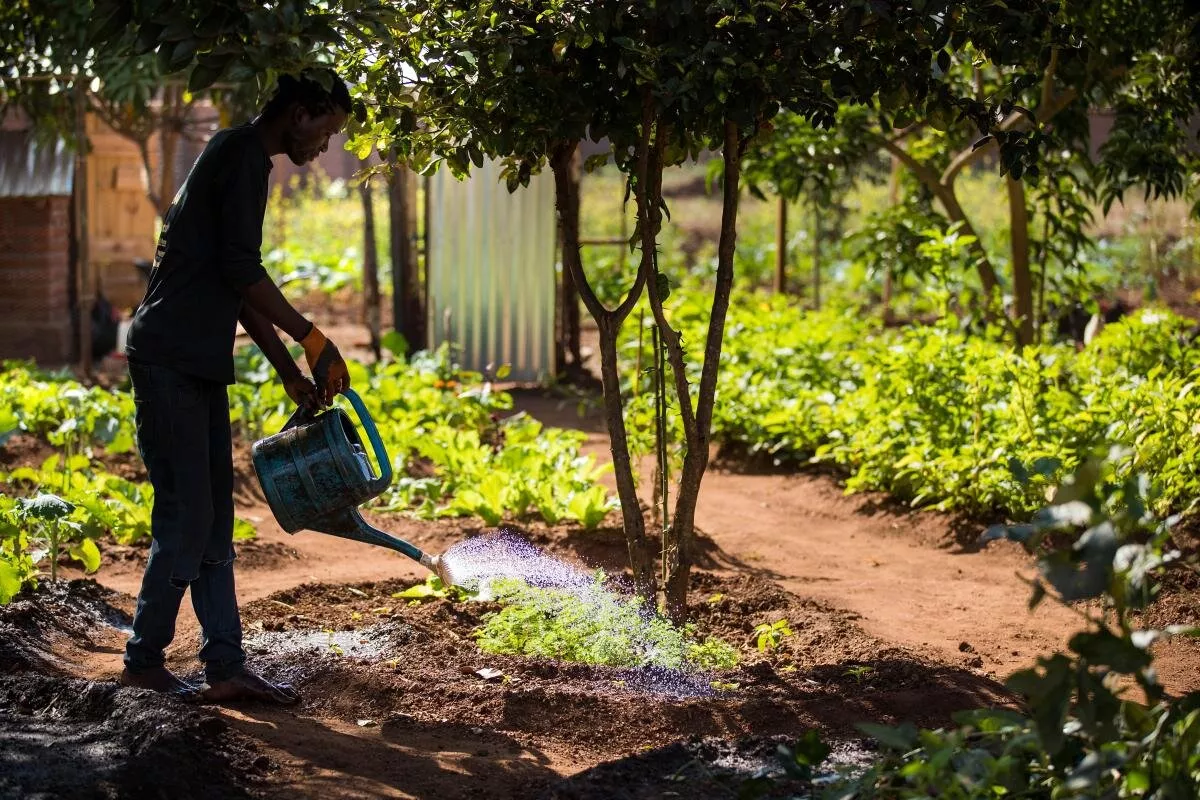
Image: Texas Children's
Launched in 2015 and still ongoing, the Baylor Children’s Foundation Malawi Initiative integrates maternal and child healthcare, agroecology, permaculture, nutrition, and environmental stewardship within a community hospital setting in Lilongwe, Malawi. Based at Area 25 Community Hospital, the initiative works with pregnant women, acutely malnourished children, adolescent mothers, youth, and community groups to address interconnected challenges related to poverty, food insecurity, malnutrition, environmental degradation, and climate change.
Operating through a partnership involving the Malawi Ministry of Health, Baylor Children’s Foundation Malawi, and Texas Children’s Health Global, the programme combines healthcare delivery with agroecological education, healing gardens, nutrition programmes, tree planting, composting, agroforestry, and community-based learning. Centered around an eight-acre agroecological and permaculture demonstration space containing approximately 150 edible and medicinal plant species, the initiative serves as a model for linking environmental health and human health outcomes within a climate-vulnerable context.
These integrated efforts connect healthcare, nutrition, agroecology, environmental restoration, climate adaptation, and community education, creating a holistic model that strengthens food system resilience, biodiversity, maternal and child health, and long-term socioecological well-being.
The Baylor Children’s Foundation Malawi Initiative operates in Lilongwe, Malawi, where poverty, food insecurity, climate vulnerability, and limited healthcare access intersect to create significant social and environmental challenges. Malawi faces recurring climate-related shocks, including droughts, flooding, erratic rainfall, and chronic food insecurity, all of which directly affect livelihoods, nutrition, and health outcomes.
The initiative is based at Area 25 Community Hospital, a Ministry of Health facility serving a peri-urban catchment population of approximately 700,000 people. Through a public-private partnership involving Baylor Children’s Foundation Malawi, Texas Children’s Health Global, government institutions, educational institutions, and local community structures, healthcare services are provided free of charge. The facility has achieved maternal and neonatal health outcomes substantially lower than national averages, while simultaneously integrating environmental and food system interventions into healthcare delivery.
At the center of the initiative is an eight-acre permaculture and agroecology demonstration site containing approximately 150 medicinal and edible plant species, agroforestry systems, pollinator-friendly spaces, composting systems, and community learning areas. The programme integrates daily health talks with agroecology education, healing garden walks, cooking demonstrations, compost-making workshops, tree planting initiatives, feeding programmes, and nutrition support for pregnant women, adolescent mothers, and malnourished children.
A major component of the initiative is the “triple seedling” programme, which connects childbirth with environmental restoration through tree seedling distribution and reforestation activities. In 2024 alone, 25,000 tree seedlings were distributed and more than 4,200 trees were planted. The programme also supports adolescent mothers and vulnerable households through nutrition programmes, community gardens, livelihood support, and skills-building activities that connect food security, environmental stewardship, and human health outcomes within a holistic resilience framework.
Learn More:
The initiative adopts a proactive approach to addressing the interconnected impacts of climate change, food insecurity, environmental degradation, and poor health outcomes. Educational programmes and agroecological interventions are designed to strengthen long-term adaptive capacity before crises escalate.
Workshops and demonstrations focus on climate adaptation strategies such as agroforestry, composting, biodiversity restoration, greywater management, soil health improvement, crop diversity, and sustainable land management. These activities help communities build resilience to recurring droughts, floods, erratic rainfall, and food insecurity that affect Malawi.
The programme also integrates preventative nutrition and maternal healthcare interventions, recognizing that strengthening food systems and environmental conditions is essential for reducing long-term health vulnerabilities.
The initiative strengthens resilience through agroecological and permaculture-based infrastructure designed to improve environmental stability, biodiversity, soil health, and food production. The eight-acre demonstration site incorporates agroforestry systems, pollinator-friendly landscapes, composting systems, water management strategies, and diverse edible and medicinal plant species.
The “triple seedling” programme further contributes to climate adaptation and ecological restoration by linking childbirth with tree planting and reforestation efforts. In 2024, 25,000 tree seedlings were distributed and more than 4,200 trees were planted to strengthen biodiversity restoration and environmental resilience within peri-urban communities.
The initiative adopts a proactive approach to addressing the interconnected impacts of climate change, food insecurity, environmental degradation, and poor health outcomes. Agroecology and permaculture activities are designed to strengthen long-term adaptive capacity before crises intensify.
Educational workshops and demonstrations focus on climate adaptation strategies including agroforestry, composting, crop diversity, soil regeneration, water management, biodiversity restoration, fuelwood alternatives, and sustainable food systems. These interventions help communities build resilience to recurring droughts, floods, erratic rainfall, and chronic food insecurity affecting Malawi.
The programme also integrates preventative maternal and child healthcare, nutrition support, and environmental education, recognizing that long-term resilience depends on strengthening both ecosystems and human health systems simultaneously.
The Baylor Children’s Foundation Malawi Initiative operates through extensive collaboration across healthcare, nutrition, agriculture, environmental, educational, and community sectors. The programme involves Baylor Children’s Foundation Malawi, Texas Children’s Health Global, the Malawi Ministry of Health, educational institutions, parastatal organizations, and local community structures working together within a single integrated framework.
This multisectoral model intentionally overcomes siloed approaches to addressing maternal health, malnutrition, environmental degradation, food insecurity, and climate resilience. Healthcare workers, agroecology practitioners, educators, nutrition specialists, and community groups collaborate to deliver integrated programmes that connect environmental stewardship with human health outcomes.
Programme lessons specifically identify the integration of multiple service lines — including healthcare, maternal and pediatric health, nutrition, environment, and agriculture — as essential for overcoming barriers associated with fragmented approaches to resilience-building and food system transformation.
The initiative strengthens resilience through agroecological and permaculture-based infrastructure designed to improve biodiversity, soil health, water management, and food production. The eight-acre demonstration site incorporates agroforestry systems, pollinator-friendly spaces, composting systems, medicinal and edible plants, and regenerative landscape design principles.
The “triple seedling” programme further contributes to climate adaptation and ecological restoration by connecting childbirth with tree planting and reforestation efforts. In 2024, the programme distributed 25,000 tree seedlings and planted more than 4,200 trees to strengthen biodiversity restoration and environmental resilience within peri-urban communities experiencing rapid growth and environmental pressure.
The Baylor Children’s Foundation Malawi Initiative integrates a gender responsive approach into emergency preparedness and resilience-building by prioritizing support for pregnant women, adolescent mothers, malnourished children, and female caregivers who are disproportionately affected by food insecurity, climate shocks, and limited access to healthcare. The programme recognizes that climate-related disruptions, malnutrition, and poverty have gendered impacts that require targeted and long-term interventions.
Specialized programmes for adolescent mothers combine nutrition support, healthcare access, education, psychosocial support, livelihood training, and food assistance within a two-year outpatient programme running from pregnancy until a child reaches one year of age. Over a three-year period, 386 adolescent mothers graduated from the programme, with many accessing family planning services, livelihood programmes, and educational scholarships. Weekly nutritious food packs and feeding programmes also help reduce household food insecurity and improve maternal and child health outcomes during periods of economic and environmental stress.
The initiative further strengthens women’s resilience through agroecology education, home garden design, cooking demonstrations, and skills-building activities focused on nutrition, climate adaptation, and environmental stewardship. Community gardens and nutrition programmes managed by mothers and guardians create opportunities for women to strengthen household food production, diversify diets, and generate income through small enterprises such as soy milk production.
By integrating maternal healthcare, nutrition, agroecology, and livelihood support within a climate-vulnerable context, the initiative strengthens the adaptive capacity of women and caregivers while addressing the structural vulnerabilities that intensify during food, health, and climate-related crises.
The initiative contributes to the rehabilitation and restoration of productive ecosystems through agroecology, permaculture, agroforestry, and biodiversity-based land management practices. The demonstration site includes approximately 150 medicinal and edible plant species integrated within pollinator-friendly spaces and agroforestry systems.
Workshops and demonstrations teach composting, intercropping, crop rotation, soil regeneration, agroforestry, and water management techniques designed to restore ecosystem functions and improve long-term productivity. Reforestation efforts through the triple seedling programme further support biodiversity restoration and ecological resilience.
The initiative prioritizes support for vulnerable and marginalized populations, particularly pregnant women, adolescent mothers, malnourished children, youth, and low-income households. Adolescent mothers participate in a two-year outpatient programme combining nutrition support, education, skills-building, and livelihood development.
Over a three-year period, 386 adolescent mothers graduated from the programme, with many accessing family planning services, scholarships, and livelihood opportunities. The programme also supports community-managed gardens and small enterprises, including soy milk production initiatives that strengthen household incomes and nutrition security.
Agroecological education and garden design activities encourage households to establish diversified food production systems that improve dietary diversity and strengthen local food security.
The initiative promotes dietary diversity and culturally appropriate nutrition through cooking demonstrations, community gardens, and nutrition education programmes. Weekly cooking demonstrations connect seasonal harvests with meal preparation while teaching participants how to prepare nutrient-rich meals using locally available ingredients.
Educational activities emphasize diversified diets, local food systems, and the nutritional value of a wide range of edible and medicinal plants grown within the agroecological demonstration site and community gardens.
Consumer education is embedded throughout the initiative through daily health talks, agroecology classes, nutrition training sessions, cooking demonstrations, healing garden walks, and environmental education workshops. Topics include nutrition, climate change, food security, biodiversity, soil health, sustainable cooking, and environmental stewardship.
The programme delivered 5,769 nutrition training sessions and 96 agroecology classes in 2024 alone. Educational activities are designed to connect food systems, environmental conditions, and human health outcomes while strengthening community awareness and practical skills.
Education is a foundational component of the Baylor Children’s Foundation Malawi Initiative. The programme combines practical demonstrations, experiential learning, healthcare education, and agroecology training to strengthen long-term community resilience.
The eight-acre demonstration site functions as a living classroom where participants engage directly with agroecological systems, composting, agroforestry, biodiversity restoration, nutrition, and climate adaptation practices. Daily and weekly educational activities support knowledge transfer across patients, healthcare workers, youth, community members, and caregivers.
The initiative emphasizes the importance of integrating local and Indigenous knowledge into programme design, agroecological practices, and environmental stewardship activities. Lessons learned from the programme highlight the importance of connecting all educational activities with local environmental realities and Indigenous knowledge systems.
The programme also recognizes the importance of designing educational materials and activities that are accessible across different literacy levels and available in vernacular languages to ensure meaningful participation and long-term uptake.
The initiative promotes shared knowledge approaches that connect agroecology, healthcare, nutrition, and environmental stewardship through practical demonstrations and community engagement. Workshops, healing garden walks, agroecology classes, cooking demonstrations, and nutrition programmes facilitate open knowledge exchange between healthcare workers, agroecology practitioners, patients, caregivers, and community members.
The programme emphasizes the importance of sharing lessons learned and demonstrating practical examples of holistic systems that integrate climate resilience, agroecology, biodiversity, and healthcare.
The initiative tracks a wide range of environmental, educational, nutritional, and health indicators to monitor programme effectiveness and resilience outcomes. Reported indicators include tree seedlings distributed, trees planted, composting projects completed, gardens designed, nutrition sessions delivered, meals provided, agroecology classes conducted, and participation rates within nutrition and adolescent mother programmes.
The programme also monitors maternal mortality, neonatal mortality, nutrition outcomes, and participation in education and livelihood initiatives, enabling ongoing evaluation of integrated health and resilience outcomes.
Help advance global understanding of how food systems are becoming more just, equitable, and sustainable.
We invite organizations, researchers, and practitioners to share their work by completing the Good News For Change Survey. Your contribution will help build a global, open-access repository showcasing real-world initiatives that embody Equitably Transformative Resilience (ETR).
For questions, contact: unescofbss@wlu.ca