We use cookies on this site to enhance your experience.
By selecting “Accept” and continuing to use this website, you consent to the use of cookies.
Dr. Alison Blay-Palmer
Founding Director, Laurier Centre for Sustainable Food Systems
Associate Professor, Geography and Environmental Studies, Wilfrid Laurier University
Dr. Adrienne Johnson
Associate Director, UNESCO Chair on Food, Biodiversity and Sustainability Studies
Associate Professor, Department of Geography and Environmental Studies
Dr. Andrew Spring
Executive Director of Research
Director, Laurier Centre for Sustainable Food Systems
Adjunct Professor and Research Associate, Wilfrid Laurier University
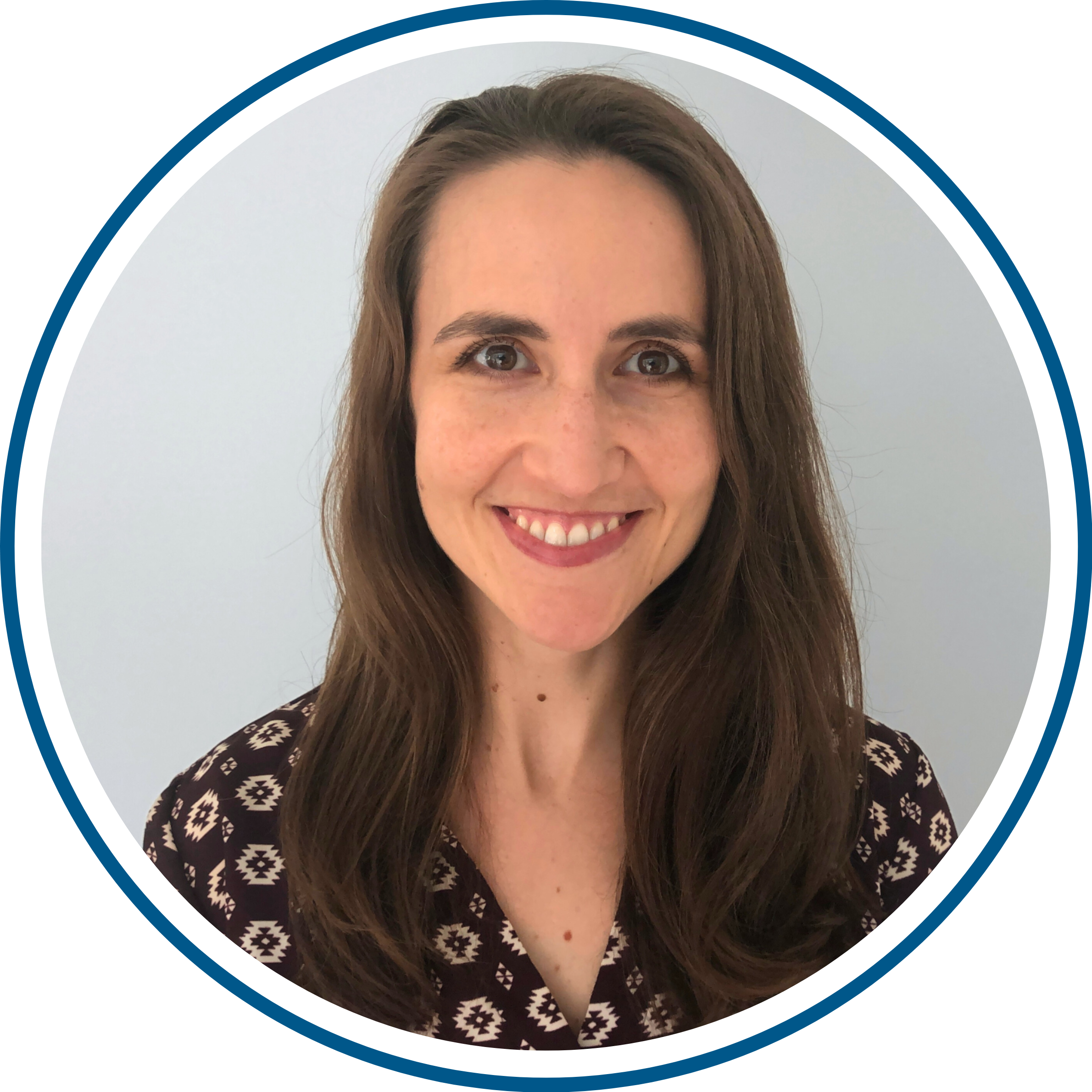

Shuchita Das (she/her) contributes to advancing research and knowledge exchange on resilient and equitable food systems across global and regional contexts. Shuchita has a B.A. in International Development & Psychology and a MSc in Sustainability Management from the University of Toronto. With experience spanning international organizations, private corporations, research networks, and community initiatives, she connects ideas, people, and processes to evolve traditional paths of development. Shuchita also supports Indigenous-led stewardship and responsible mineral development at the World Wildlife Fund Canada.
 Dr. Adrienne Johnson is a human geographer who earned her PhD from Clark University, United States. Her dissertation looked at the political ecology and critical resource geographies of Ecuador's palm oil industry with a specific focus on Afro-Ecuadorian, smallholder, and company participation in the Roundtable on Sustainable Palm Oil (RSPO) certification scheme. Dr. Johnson holds an MA in geography and a BA (Hons.) in Political Science and International Development Studies from York University, Canada. Before joining Wilfrid Laurier University in 2025, she was an Associate Professor of Environmental Studies at the University of San Francisco, and a 2015-17 Social Sciences and Humanities Research Council (SSHRC) of Canada postdoctoral scholar at the Faculty of Environmental Studies, York University. Dr. Johnson's areas of expertise include environmental governance, palm oil and extraction, and feminist methods and methodologies.
Carla Johnston is a PhD Candidate at the Balsillie School of International Affairs, specializing in community-based participatory action research, Indigenous rights, and food systems governance. She has a decade of experience in political advocacy, community-led planning, and policy analysis with Indigenous Peoples in the Northwest Territories, Canada, and at the United Nations. Carla was a Polar Knowledge Fellow for 2024-2025 and a SSHRC Joseph-Armand Bombardier Canada Graduate Scholar. She holds a Master of Arts in Political Economy from Carleton University and a Bachelor of Arts in International Development Studies from Trent University.
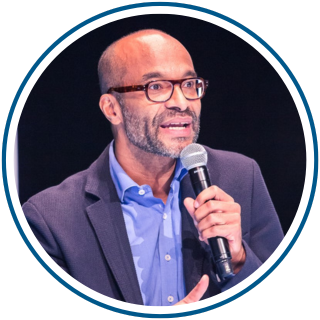 Damien Conaré is the Secretary General of the UNESCO Chair in World Food Systems at the International Centre for Higher Education in Agricultural Sciences (L'Institut Agro) in Montpellier, France. There, he develops activities around three main areas: coordinating action-research programs, particularly on the sustainability of urban food systems and on food solidarities; developing educational training programs, mainly an Advanced Master Degree on innovations and Policies for Sustainable Food Systems; and fostering science-society dialogues through conferences, seminars, and publications.
 Jane Battersby is an urban geographer with an interest in all things food related. She is an Associate Professor in the Department of Environmental & Geographical Science at the University of Cape Town, and a Research Associate of the African Centre for Cities. Her current areas of particular interest are urban food systems, urban food policies and the construction of food security theory in Northern and Southern research contexts. This work has both theoretical and applied components. Underpinning her food work is an ongoing interest in the linkages between spatial transformation and identity transformation in post-apartheid urban areas – a topic she has addressed through the lenses of youth identities, education, music and land restitution. She led the HLPE-FSN 19 report on urban and peri urban food systems, is a member of the IPES-Food Expert Panel and co-leads the Cluster of Excellence on Food Environment Actions for the Promotion of Health as part of the Public Health priority area of the Africa-Europe Clusters of Excellence programme, led by ARUA and The Guild.

Jill Clark’s research focus is agrifood system policy and planning, centering on community and state governance of food systems and public engagement. Clark provides statewide leadership as a steering committee member of the Ohio Food Policy Network; international leadership as the past president of the Agriculture, Food and Human Values Society; and local leadership as an appointment member of the Columbus & Franklin County Local Food Board. She recently was awarded the 2022 Excellence in Engaged Scholarship from the Engaged Scholarship Consortium.
Before joining the faculty, Clark directed the Center for Farmland Policy Innovation at Ohio State from its opening in 2006 until her departure in 2012. Before coming to Ohio State, she directed the Ohio office of American Farmland Trust, a national nonprofit.
Kent Mullinix is Director of Institute for Sustainable Food Systems (ISFS) at Kwantlen Polytechnic University and is engaged in research and development to advance ecologically sound agriculture and robust regional food systems. Additionally, he is an Adjunct Professor in The Faculty of Land and Food Systems at the University of British Columbia and serves on the editorial board for the Journal of Agriculture, Food Systems and Community Development. With the ISFS, Kent is currently modeling the food self-reliance and economic development potential for a Vancouver Island bioregion food system and is bringing together key food system actors from across the Vancouver Island bioregion to collaboratively prioritize actions and inform regional food system resilience planning and development.
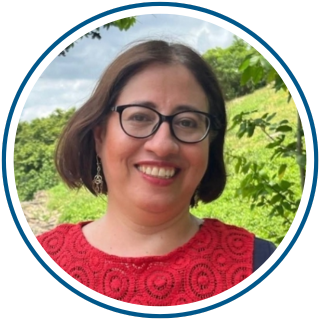 Laura Gómez Tovar is an engineer in agroecology from the Universidad Autónoma Chapingo. She holds a Master’s degree in Science, Society and Technology, with a specialization in Innovation Systems and Ecological and Social Change, from Roskilde University and Aalborg University in Denmark. She is a researcher and professor in the Department of Agroecology at the Universidad Autónoma Chapingo, as well as a founding researcher of the Interdisciplinary Research Center for Integral Rural Development (CIIDRI). Laura helped establish Chapingo’s Organic Local Market (Tianguis Orgánico Chapingo) and the Mexican Network of Local Organic Markets, both important platforms supporting sustainable agriculture and local economies. Laura is currently collaborating with farmers, researchers, and community leaders in Veracruz State, Mexico to gradually scale up agroecology, prioritizing community-based economies, social justice, health and well-being, and network-based knowledge-sharing.
Lauren Baker is Deputy Director of the Global Alliance for the Future of Food, where she leads program strategy and supports global initiatives focused on climate, biodiversity, food security, and equity. A systems thinker, skilled facilitator, and practical problem-solver, Lauren has worked for over 20 years in non-profit, government, academic, business, and philanthropic contexts. With Global Alliance members and partners, Lauren leads the program strategy and supports diverse organizations and initiatives including the True Cost Accounting Accelerator, Transformational Investing in Food Systems, and the Agroecology Coalition, to address global challenges related to climate, biodiversity, food security, and equity.
Dr. Rachel Carey is a Senior Lecturer in Food Systems in the School of Agriculture, Food and Ecosystem Sciences (SAFES) at the University of Melbourne, where her teaching and research focuses on resilient and sustainable food systems, food policy and food security. One of Rachel’s key research interests is the resilience and sustainability of city food systems in the face of growing challenges from climate change, pandemic, population growth, urban sprawl and from declining supplies of natural resources, such as land and water. Rachel leads the Foodprint Melbourne research project, which is investigating approaches to strengthen the resilience of Melbourne’s food system to shocks and stresses and the role of Melbourne’s foodbowl in increasing the resilience of the city’s food supply.
Dr. Tammara Soma, MCIP RPP, is an Associate Professor at the School of Resource and Environmental Management (Planning program) at Simon Fraser University and Research Director of the Food Systems Lab. She is also the Faculty Lead on the Simon Fraser University–Aga Khan University, Arusha Climate Environmental Research partnership in Tanzania. She conducts research on issues pertaining to food loss and waste, food systems planning, food security and food systems resiliency, Indigenous food sovereignty, and the circular food economy in Canada and globally. She is routinely featured in international and local media on various food-related issues (The Guardian, CBC, TVO, CTV, National Observer, Chatelaine, etc.) and is the co-director/co-writer of the CBC documentary “Food is My Teacher.” Dr. Soma was selected as a committee member of the US National Academies of Sciences and co-authored the consensus study A National Strategy to Reduce Consumer Food Waste. She also served on the expert panel of the Council of Canadian Academies’ report on “Atypical Food Production Technologies for Canadian Food Security.” Most recently she was selected as a UN expert panel to be on the drafting team of a report on “Building Resilient Food Systems.” Dr. Soma is the co-editor of the Routledge Handbook of Food Waste and has been published in various academic journals including in Journal of American Planning Association, Journal of Planning Education and Research, Agriculture Human Values, Journal of Cleaner Production, and more. Dr. Soma is a registered professional planner with the Canadian Institute of Planners.
 Terah Sportel is an Assistant Professor in the Department of Geography and Environmental Studies, Wilfrid Laurier University, Canada. She is a development geographer focused on sustainable agrarian livelihoods with a strong commitment to India’s professional research, community development, and policy networks. She has 10+ years of experience conducting research and outreach in Tamil Nadu and Kerala through work on water supply and sanitation, livelihood change and labour agency in the coconut economy, and shifting traditional, caste-based livelihoods within the palm toddy and handloom sectors. Dr Sportel’s research aims to contribute to rural development by focusing on agrarian change, labour dynamics, and sustainable livelihoods to develop practical supports for communities, shape policies and programmes, and strengthen sustainability.
Contact Us:
Alison Blay-Palmer, Chairholder
Adrienne Johnson, Associate Director
Kelsey Speakman, Project Coordinator
Shuchita Das, Communications and Project Support Assistant
General Inquiries